
The Resplendent Quetzal (Pharomachrus mocinno) — Professional Dossier
Executive summary
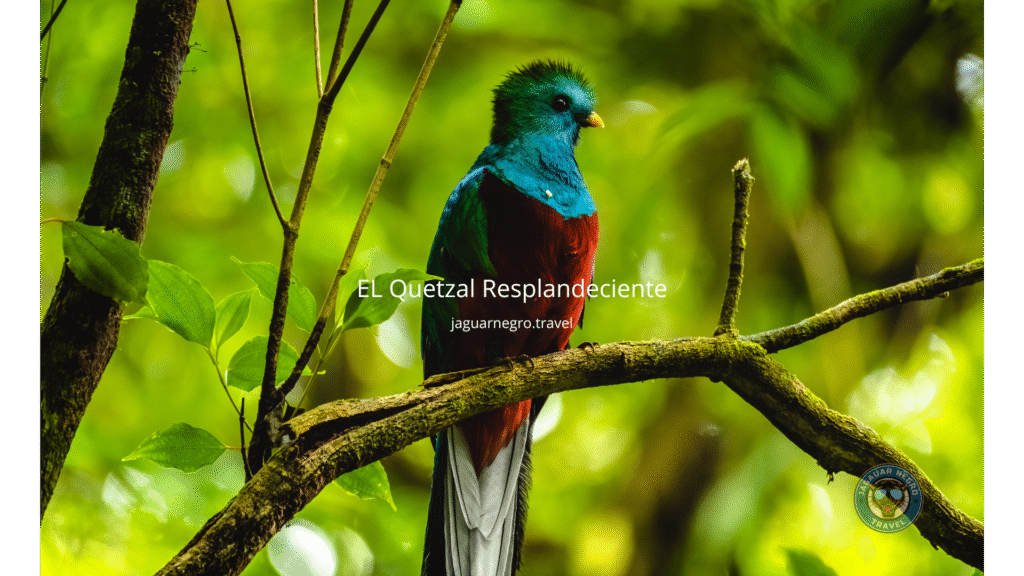
The Resplendent Quetzal (scientific name Pharomachrus mocinno) is the emblematic bird of Guatemala: a cloud-forest specialist famous for its iridescent green plumage and long male tail streamers. It is a powerful cultural symbol—venerated by Maya and other Mesoamerican peoples, associated with freedom and nobility—and was proclaimed a national symbol in the nineteenth century; its image appears in the national coat of arms, on banknotes and postage, and gives its name to the Guatemalan currency, the quetzal. Biologically the species is classified as Near Threatenedlargely because of habitat loss and fragmentation and is the subject of several conservation initiatives. [1][2][3][4][5]
1) Taxonomy and identification
- Common name: Resplendent Quetzal (often shortened to “quetzal”).
- Scientific name: Pharomachrus mocinno (De la Llave, 1832).
- Family / order: Trogonidae / Trogoniformes.
- Key field characters: adult males are iridescent green (appearing gold-to-blue depending on light) with a bright red breast and extremely long, filamentous central tail feathers (in some populations these streamers can exceed the bird’s body length). Females are shorter-tailed and less flamboyant but still colorful. The species is renowned for its shimmering plumage and distinctive silhouette. [1][3][7]
2) Distribution and habitat
- Range: The Resplendent Quetzal is native to montane cloud forests of southern Mexico, Guatemala, Honduras, El Salvador (historically sparse), Nicaragua (patchy), Costa Rica, and western Panama. Its distribution is tied to intact cloud forest at mid- to high elevations. [1][4][7]
- Habitat: Cloud forests and highland humid montane forest (generally 900–3,000 m elevation depending on latitude). It relies on mature forest with abundant fruiting trees (especially members of the laurel family) and suitable tree cavities for nesting. [7][9]
3) Behavior and natural history
- Diet: Primarily frugivorous (favours wild avocados and other Lauraceae), supplemented with insects, small frogs and lizards. As a seed disperser of large-fruited trees, the quetzal plays an important ecological role in cloud-forest regeneration. [7][9]
- Breeding: Seasonally monogamous; nests in tree cavities (natural or excavated by woodpeckers or in soft rotten wood). Both parents typically participate in incubation and chick rearing. Juvenile males take years to grow full tail streamers. [7][8]
- Movement: Generally sedentary within montane zones but may perform short altitudinal movements in search of fruit outside the breeding season. [1][8]
4) Conservation status & threats
- IUCN Red List: Near Threatened (population trend decreasing). Primary threats are habitat loss (deforestation and forest fragmentation), agricultural expansion, logging, and local trapping/poaching in some areas. Estimates of population size vary; some sources suggest tens of thousands of individuals but with localized declines and fragmentation. Conservation depends on protecting cloud-forest habitat and maintaining ecological corridors. [4][1][9][8]
- Conservation actions: Protected areas in Guatemala and neighbouring countries contain quetzal populations; conservation organizations (national parks, NGOs, community ecotourism projects) promote habitat protection, reforestation, and environmental education to reduce illegal capture and to conserve the bird’s habitat. Scientific monitoring and community-led programs (for example, birding tourism that benefits local communities) are important tools for long-term survival. [1][7][8]
5) Cultural and historical significance (Pre-Columbian to modern)
- Maya and Mesoamerican reverence: In Maya and Aztec cultures the quetzal’s green feathers were sacred and powerful symbols of life, fertility and royalty; quetzal feathers were used in headdresses, garments of elites and ritual objects, and were so valuable they functioned as prestige currency or tribute. The bird was associated with the feathered-serpent deity (Quetzalcoatl / Kukulcán) and with nobility. Many Mesoamerican laws forbade killing quetzals; instead feathers were taken and the bird released—reinforcing its symbolic link to freedom. [2][3][5]
- Symbol of freedom: A longstanding cultural idea is that the quetzal cannot live in captivity—this belief reinforced its symbolic association with liberty. That association helped make the bird a natural emblem for emerging national identities in the 19th century. [2][3]
- Appearance in state symbols and currency: The quetzal appears on Guatemala’s coat of arms and flag devices (as the bird represented above the parchment), and in 1925 the national currency was named the “quetzal” in honour of the bird—cementing its role as an emblem of national identity and value. The bird is commonly used in stamps, banknotes and institutional imagery. [5][6][1]
6) The quetzal as a national symbol: history & people involved
- 19th century adoption: Historical accounts indicate the quetzal was formally declared a national symbol (national bird/animal) during the Liberal government era of 1871 when symbols such as the flag and coat of arms were reworked as part of a broader project of national identity formation after the Liberal Revolution. Leaders linked to that era—such as Miguel García Granados and allied reformers—promoted national emblems that drew on indigenous and regional symbolism (the quetzal’s cultural meaning made it a logical choice). Sources commonly place the formal declaration and wider popular acceptance of the quetzal as a national emblem in 1871. [5][11][1]
- Iconography and implementers: The Swiss engraver Johann-Baptist (Juan Bautista) Frener is credited in numismatic and heraldic records with engraving/design work commissioned during the era (the same period when national emblems were standardized), and government decrees and mint commissions of the 1870s incorporated the quetzal into official insignia such as the coat of arms and coins. [1][12]
7) Human uses & symbolic economy
- Feathers and prestige: Historically quetzal feathers were used in ceremonial regalia and represented wealth. In modern times the bird’s image became symbolic currency: the Guatemalan monetary unit “quetzal” (GTQ) commemorates that tradition. The bird’s symbolism (freedom, natural wealth) has been widely used in arts, tourism branding, and state iconography. [2][6]
- Tourism & livelihoods: Quetzal-watching is a nature-tourism draw in cloud-forest regions (e.g., Antigua highlands, Sierra de las Minas, Guatemala’s cloud-forest reserves, and parts of Costa Rica/ Panama). Well-managed ecotourism can provide local economic incentives for conserving habitat. [7][8]
8) Scientific research & monitoring highlights
- Recent ecological studies emphasize quetzal dependence on intact cloud forest and large-fruited trees; research also documents local population declines where deforestation and fragmentation are pronounced. Peer-reviewed and regional studies (ecological surveys and monitoring programs) underscore the importance of protecting breeding and feeding habitat and maintaining connectivity across elevational gradients. (See selected references below for monitoring and abundance research.) [8][15]
9) Practical guidance for media, publication and education use
- Accuracy in portrayal: use the correct scientific name (Pharomachrus mocinno) and avoid depicting captive quetzals as typical (the species is notoriously difficult to keep in captivity and captive specimens historically fared poorly). [7][4]
- Imagery & permissions: if using photographs for commercial purposes, respect copyright and prefer images from conservation partners or photographers who agree to responsible use (avoid images that encourage keeping quetzals as pets).
- Conservation messaging: when publishing images or stories about quetzals, include context about habitat, threats, and local conservation efforts—this elevates the story from pure aesthetics to conservation impact. [1][9]
10) Quick facts (summary box)
- Scientific name: Pharomachrus mocinno. [1]
- IUCN status: Near Threatened (declining). [4]
- Typical habitat: Montane cloud forest (mid-high elevations). [7]
- Cultural role: Sacred to Maya/Aztec civilizations; national bird of Guatemala, appears on coat of arms and currency. [2][5][6]
- Main threats: Deforestation, fragmentation, agricultural expansion, local trapping. [4][1]
11) Selected further reading & sources (numbered links)
Below are the primary references used to compile this dossier. I list them as numbered links so you can paste them directly into bibliographies or endnotes:
- BirdLife International — Resplendent Quetzal factsheet (Pharomachrus mocinno).
https://datazone.birdlife.org/species/factsheet/resplendent-quetzal-pharomachrus-mocinno - Wikipedia — “Resplendent quetzal.”
https://en.wikipedia.org/wiki/Resplendent_quetzal - National Geographic — Resplendent Quetzal (species profile).
https://www.nationalgeographic.com/animals/birds/facts/resplendent-quetzal - IUCN Red List — Pharomachrus mocinno (species assessment).
https://www.iucnredlist.org/species/22682727/92958465 - Culture Trip — “How The Quetzal Became Guatemala’s National Bird” (background on adoption as symbol).
https://theculturetrip.com/central-america/guatemala/articles/quetzal-became-guatemalas-national-bird - Wikipedia — “Guatemalan quetzal” (currency; background on name and cultural ties).
https://en.wikipedia.org/wiki/Guatemalan_quetzal - World Land Trust — Resplendent Quetzal species page (natural history & conservation).
https://www.worldlandtrust.org/species/birds/resplendent-quetzal/ - Neotropical Biodiversity / Pensoft — Reynaud et al., “Abundance of the Resplendent Quetzal…” (ecological/monitoring research).
https://neotropical.pensoft.net/article/72273/ - American Bird Conservancy (ABC) — Resplendent Quetzal species overview.
https://abcbirds.org/bird/resplendent-quetzal/ - Additional background & touristic/ecology pieces: Whitehawk birding / travel writeups and regional conservation pages (useful for outreach and community tourism case studies).
https://www.whitehawkbirding.com/national-bird-of-guatemala/