
La Antigua Guatemala: History of a Monument City
La Antigua Guatemala, a colonial jewel of the Americas and a symbol of Guatemalan identity, has witnessed transcendental events that shaped the course of the nation. From its splendor as the capital of the Kingdom of Guatemala to its rebirth as a World Heritage Site, this is a chronological journey through the moments that forged its history.
📜 1660: The Printing Press Arrives in Santiago de Guatemala
Thanks to Bishop Payo Enríquez de Ribera, a visionary and promoter of knowledge, a printing press was brought from Puebla de Los Ángeles (Mexico) to Santiago de Guatemala. This was the third printing press in the Americas.
It was operated by José de Pineda Ibarra, considered the first printer of Guatemala.
Pineda Ibarra, born in Spain, settled in Santiago and published important ecclesiastical and civil documents, boosting the cultural and intellectual life of the Kingdom.
🏛️ 1680: Construction of the Cathedral
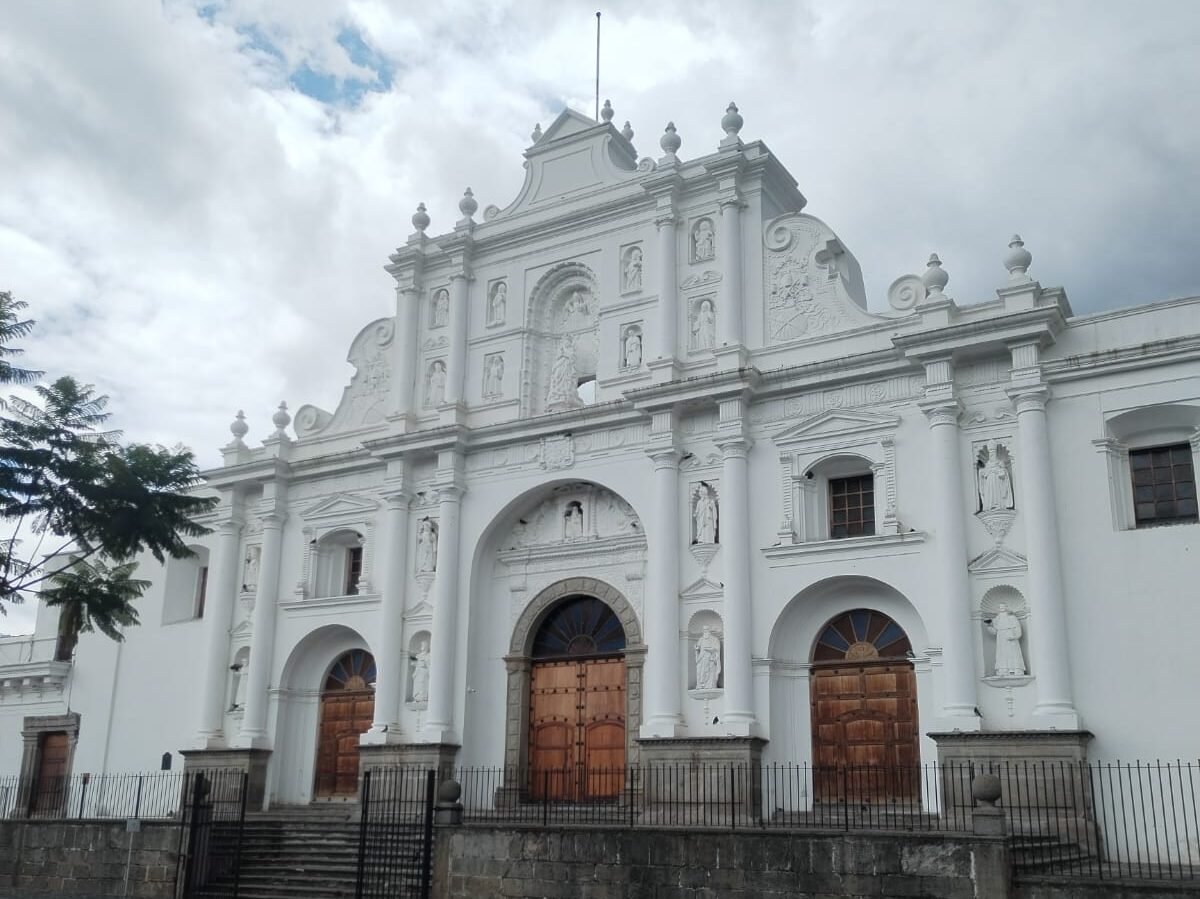
In this year, the majestic Cathedral of Santiago was built, one of the most imposing in the Americas at the time. Its baroque façade and great size reflected the city’s importance as the religious and political center of the Kingdom of Guatemala.
🎓 1681: Foundation of the Royal and Pontifical University of San Carlos
The Royal and Pontifical University of San Carlos of Guatemala was founded, one of the oldest in the continent. It was key in the education of generations of intellectuals, doctors, jurists, and clergy. This institution remains active today as the University of San Carlos (USAC), the only public university in the country.
🌋 1773: The Santa Marta Earthquake
On July 29, 1773, a devastating earthquake known as the Santa Marta Earthquake struck the city, destroying much of its infrastructure. This natural disaster marked the beginning of the end for Santiago as the capital.
🧑🏻✈️ 1773: Governor Martín de Mayorga and the Order to Relocate
At the time, President, Governor, and Captain General Martín de Mayorga, a Spanish military officer with great authority, ordered the relocation of the capital to a safer site: what we now know as Guatemala City. Although there was resistance, the move was inevitable.
🏞️ 1774: The Official Birth of “La Antigua Guatemala”
On July 24, 1774, according to official documents, the city changed its name from Santiago de los Caballeros to La Antigua Guatemala, in reference to its former role as the capital.
The population dropped from 33,000 inhabitants to only 8,000, turning it into a semi-abandoned place, but over time, it would be reborn.
🏘️ 1786: Declared a Villa
Despite its partial abandonment, in 1786 it was officially granted the title of Villa, recognizing its historical importance.
🏛️ 1944: National Monument
On March 30, 1944, La Antigua was declared a National Monument of Guatemala, thus recognizing its architectural and cultural value for the nation.
🛠️ 1946: Scientific Conservation Methods
The Institute of Anthropology and History (IDAEH) began implementing technical conservation methods that prevented the total loss of its colonial structures.
🇬🇹 1958 and 1962: Symbolic Capital for a Day
On September 25, 1958, and again in 1962, La Antigua was named Capital of the Republic of Guatemala for one day, in honor of its historical legacy.
🌎 1965: Monument City of the Americas
In 1965, during the VIII General Assembly of the Pan American Institute of Geography and History, it was awarded the title of Monument City of the Americas, one of the highest recognitions in the continent.
🛡️ 1969: Creation of the National Council for the Protection of La Antigua Guatemala
To ensure its preservation, in 1969 the National Council for the Protection of La Antigua Guatemala was created. This council remains active and is made up of representatives from:
- The Municipal Mayor
- The Faculty of Architecture and Humanities of USAC
- The Academy of Geography and History
- The Institute of Anthropology and History
🌐 1979: UNESCO World Heritage Site
Finally, in 1979, La Antigua Guatemala was declared a Cultural and Natural World Heritage Site by UNESCO. This international title consolidated its global importance as one of the best-preserved colonial cities in the Americas.
📚 Conclusion
The history of La Antigua Guatemala is a journey of splendor, tragedy, resilience, and rebirth. Today, each cobblestone street and restored ruin tells a centuries-old story. The city is not only a testament to the past but also a living symbol of Guatemalan identity.
Jose Ag
jaguarnegro.travel
Bibliography: Centro Virtual Cervantes – World Heritage Cities, La Antigua Guatemala. [cvc.cervantes.es] (Accessed August 2025).