
Kaq’ik – Traditional Guatemalan Turkey Soup
Complete Professional Article in English with Important Facts & Links
Introduction
Kaq’ik (also spelled Kak’ik, Kak ik, Kaqik, or Kak’-ik) is a traditional, rich red turkey soup from Guatemala with deep cultural roots in the Q’eqchi’ Maya community. It is one of the most iconic and flavorful dishes in Guatemalan cuisine. In 2007, it was officially declared part of the Intangible Cultural Heritage of the Nation by the Guatemala Ministry of Culture and Sports.
👉 Wikipedia (English) – Kak’ik: https://en.wikipedia.org/wiki/Kak%27ik
Name and Linguistic Origin
The name Kaq’ik comes from the Q’eqchi’ Maya language:
- “kak” means red
- “ik” means hot or spicy
This reflects the dish’s vivid red color and spicy flavor profile, characteristic of the ingredients and cooking techniques used in traditional preparation.
Geographic & Cultural Roots
Kaq’ik originates from the Alta Verapaz region of Guatemala, especially in and around the city of Cobán, which is historically and culturally central to the Q’eqchi’ Maya people.
Originally, this turkey soup was prepared for special occasions, ceremonies, and community gatherings, and today remains a celebrated national dish enjoyed throughout the country.
Historical & Cultural Significance
- Pre-Hispanic origins: Kaq’ik is deeply rooted in ancestral Maya culinary traditions, made long before Spanish colonization.
- Symbolism: The red broth — often associated with annatto (achiote) — has cultural ties to ritual symbolism, recalling strength, blood, and life in ancient Maya belief systems.
- Intangible Heritage: Its status as cultural heritage recognizes Kaq’ik as a culinary expression that preserves identity, history, and tradition in Guatemalan society.
Main Ingredients
Traditional Kaq’ik ingredients combine native Guatemalan products with spices and herbs to build a complex flavor:
🔥 Core Ingredients
- Turkey (chompipe): The traditional protein, providing depth and richness.
- Achiote (annatto seeds/paste): Gives the soup its signature bright red color and earthy taste.
- Tomatoes & miltomates: A base for flavor and acidity.
- Garlic & onions: Aromatic foundation.
- Chiles (e.g., Cobanero, guaque, pasa): Provide spice and regional heat.
- Herbs (cilantro, mint, hierbabuena, zamat): Add fragrant complexity.
🍽 Accompaniments
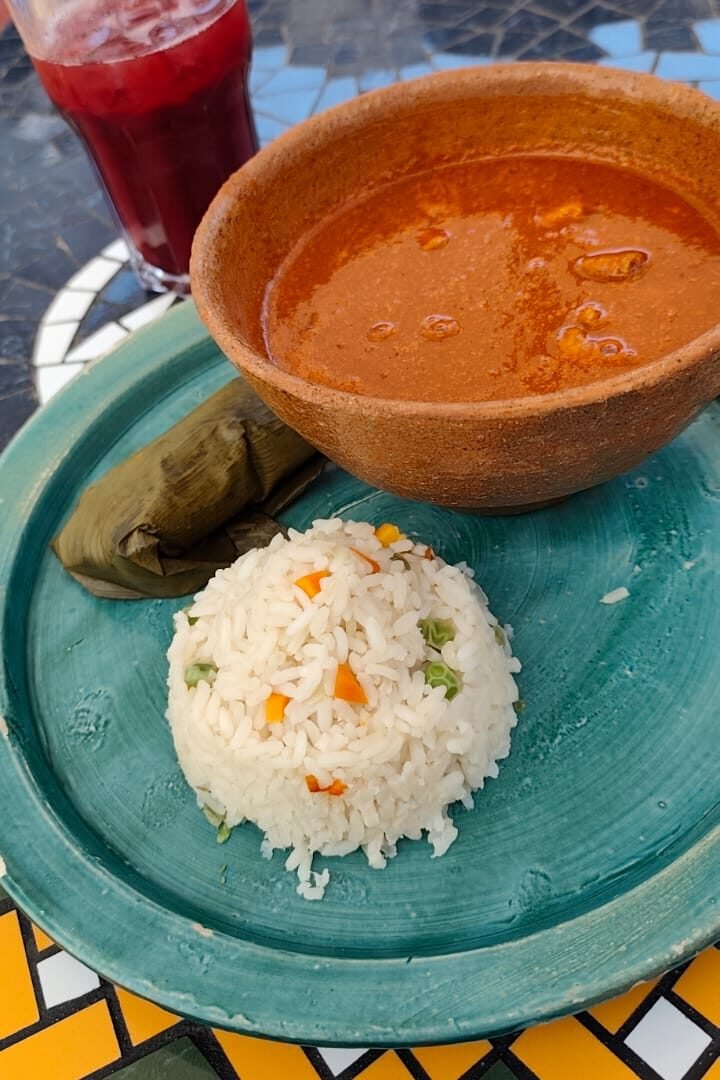
- White rice: Often served alongside the soup or added into the broth.
- Tamalitos blancos (small corn tamales): Wrapped in banana or mashán leaves and served together with Kaq’ik.
Flavor Profile & Cooking Style
Kaq’ik is known for its bold, savory, spicy, and aromatic flavor. The broth is typically reddish and richly spiced due to achiote and chiles, with depth added by slow-simmered turkey and herbs.
The cooking process emphasizes:
- Toasting and blending chiles for a saturated base flavor.
- Slow simmering of turkey with vegetables and herbs to allow the rich aromas to develop and infuse the broth.
Traditional Serving & Presentation
Kaq’ik is often:
- Served hot, especially in cooler highland climates.
- Accompanied by white rice and small tamales.
- Garnished with additional chile or herbs depending on local preference.
In its region of origin, it may also be paired with traditional cocoa drinks or other local beverages as part of a full ceremonial or celebratory meal.
Regional Variations
While the core recipe remains similar, some variations exist throughout Guatemala:
- Cobán version: Uses the regional Cobanero chile, known for its heat and flavor intensity.
- Family recipes: Some households integrate additional herbs or spices reflecting family heritage.
- In areas where turkey is less available, chicken is sometimes used — though purists emphasize that turkey offers the most authentic taste.
Cultural Occasions & Importance
Kaq’ik is not only a food — it’s a culinary representation of community life in Guatemala:
✨ Traditionally served at weddings, religious celebrations, markets, harvest festivals, and family gatherings.
✨ It represents communal unity and is often prepared collaboratively.
✨ Today, it is served in restaurants throughout Guatemala, from Cobán to Antigua Guatemala and beyond.
Historical Notes
- The use of turkey (chompipe) recalls its historical prestige among Indigenous communities before Spanish colonization.
- The dish’s long history is tied to ancient Maya rituals and seasonal gatherings, where turkey and rich broths symbolized abundance.
- Modern recognition as cultural heritage strives to preserve both the recipe and the traditions that surround its preparation.
Key Facts at a Glance
| Aspect | Detail |
|---|---|
| Dish Name | Kaq’ik (also spelled Kak’ik) |
| Origin | Guatemala (Alta Verapaz, Q’eqchi’ Maya heritage) |
| Main Ingredient | Turkey (chompipe) |
| Color & Flavor | Red, spicy, aromatic broth |
| Heritage Status | Intangible Cultural Heritage of Guatemala |
| Common Accompaniments | Rice, tamalitos blancos |
Further Reading & Resources
- Wikipedia – Kak’ik (English): https://en.wikipedia.org/wiki/Kak%27ik
- Atlas Obscura – Kak’ik information: https://www.atlasobscura.com/foods/kakik-kaqik-guatemala-turkey-soup
- Preservation & Culture on IFAD – Kak-Ik recipe: https://www.ifad.org/es/w/recipes-for-change/guatemala-kak-ik-turkey-soup