
Avenida La Reforma and Torre del Reformador (Guatemala City): History, Tourism, People and Current Events
The Reforma Avenue and the Reformer’s Tower. They are two of the most emblematic urban elements of Guatemala City. These iconic landmarks, symbols of republican history, civic pride, and urban development, are located in the heart of Guatemala City and connect complex cultural, historical, architectural, and touristic aspects that are well worth exploring.
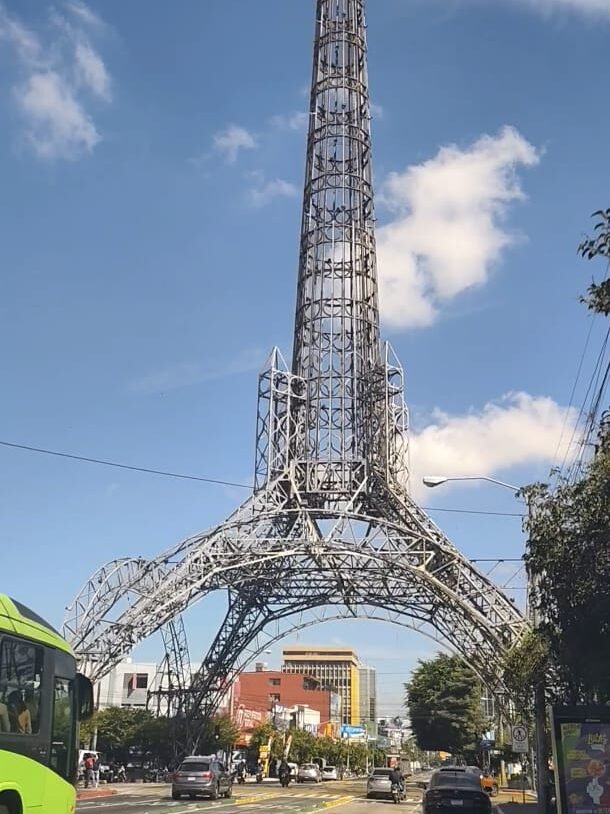
📍 Avenida La Reforma: A historic walk through the heart of the city
Origin and inauguration
The Reforma Avenue It is a historic boulevard created as part of the urban expansion of Guatemala at the end of the 19th century. Its construction began in 1892 under the government of the president José María Reina Barrios and was officially inaugurated in 1895. The project responded to the drive to modernize the city and promote the display of national progress, drawing inspiration from European boulevards such as the Champs-Élysées, Paris.
Originally, this route was called:
- Boulevard June 30th,
- then Boulevard Reformer,
- after Paseo La Reforma,
- and finally Reforma Avenue as we know it today.
This avenue extends approximately 2.26 km from the north to the south of the city, connecting central areas with important districts and serving as an axis of urban identity between the zones 9 and 10.
Urban design and meaning
- It was conceived as a wide boulevard, with side and central canals, originally intended for carriages and pedestrian walkways.
- Reforma Avenue was declared Historical Complex by the Ministry of Culture and Sports, and is protected by the Law for the Protection of the Cultural Heritage of the Nation.
Monuments and sculptures
Throughout its length, La Reforma houses more than twenty monuments that honor historical figures, heroes, and moments in the country. Among the most important are:
- Monument to José María Reina Barrios (creator of the avenue).
- Mother’s Square.
- Statue of Miguel Ángel Asturias (Nobel Prize in Literature).
- Monument to Miguel García Granados (President after the liberal revolution).
This avenue can be explored by car or on foot, and is ideal for a cultural urban stroll thanks to its architecture, parks, and outdoor artwork.
Impact on the urban fabric
The construction of La Reforma marked a milestone in the urban expansion of Guatemala City, breaking with the old concentric colonial design and directing growth to the south and west. The boulevard’s planning reflected the spirit of modernity that was driving the country at that time.
📍 Reformer Tower: The symbol of Guatemalan modernization
History and purpose
The Reformer’s Tower It is one of the most visible and emblematic monuments on the city’s main axis. It was Built in 1935 to commemorate the Centenary of the birth of General Justo Rufino Barrios( born onJuly 19, 1835), who was president of Guatemala and the driving force behind a series of reforms that transformed Guatemalan society in the 19th century.
The inauguration took place on July 19, 1935 during the government of the president Jorge Ubico Castañeda, and the monument was initially named “July 19th Commemorative Tower” before adopting its current name.
Design and construction
- The tower measures approximately 71.85 meters tall and built with galvanized steel brought from the United States.
- Its shape resembles the Torre Eiffel in Paris, making it a unique structure in Central America.
- It was assembled by the engineer Arturo Bickford, who was also the city’s mayor at that time.
- In its original structure, a bell donated by the Belgian Government, symbol of international brotherhood.
Evolution and current use
Over the years, the Reformer Tower has undergone several changes to its lighting system:
- Its reflectors and neon lights have been modernized with LED technology.
- The lighthouse at its summit has been replaced several times, including by a donation from the airline. American Airlines to improve aerial signaling.
Today the tower is not only an architectural landmark, but also a visual symbol of the city, visible from multiple points and a must-see photo opportunity on urban tours.
📅 Key figures involved
José María Reina Barrios (1854–1898)
President of Guatemala (1892–1898), he promoted urban and economic modernization and the opening of the Reforma Avenue inspired by European models.
Justo Rufino Barrios (1835–1885)
Known as “The Reformer”, president who implemented profound social, economic, and educational transformations in Guatemala during the second half of the 19th century, a legacy that inspired the name and purpose of the Reformer’s Tower.
Jorge Ubico Castañeda (1878–1946)
President of Guatemala (1931–1944), under whose government the Reformer Tower was officially inaugurated in 1935.
Arturo Bickford
Engineer responsible for the assembly of the Reformer Tower at its current location in the 7th Avenue and 2nd Street, Zone 9.
🏨 Nearby tourism and points of interest
Featured hotels near La Reforma
- Hyatt Centric Guatemala City – Contemporary hotel in an area close to restaurants and nightlife.
- InterContinental Real Guatemala by IHG – Classic luxury hotel for comfortable stays.
- Barceló Guatemala City – a well-located option for tourists.
(These hotels are in the downtown area and zones 9/10 of Guatemala City, with easy access to Avenida La Reforma and Torre del Reformador by public transport or car ride).
Recommended nightclubs and restaurants
- Bars and clubs of the Living Zone (very close to La Reforma).
- Restaurants with local and international cuisine along the avenue and surrounding area.
Tourist activities
- Walking or cycling tours along the entire boulevard, admiring sculptures and monuments.
- Urban photography, especially of the Reformer Tower.
📌 Current events and relevance
Today, both the Reforma Avenue like the Reformer’s Tower They remain symbols of Guatemalan urban identity:
- The avenue is a cultural and tourist hub, ideal for walking, urban cycling and historical exploration.
- The tower lights up and stands out visibly, integrating into the modern life of the city, with cultural events and panoramas that are incorporated into the urban environment.
🔗 REFERENCE LINKS
• Reforma Avenue (Wikipedia)
https://es.wikipedia.org/wiki/Avenida_Reforma
• Reformer’s Tower (Wikipedia)
https://es.wikipedia.org/wiki/Torre_del_Reformador
• History of the Reformer’s Tower and how it came to Guatemala
https://republica.com/vive-guatemala/la-historia-de-la-torre-del-reformador-y-como-llego-a-guatemala-20228249500
• Cultural facts about Avenida La Reforma
https://aprende.guatemala.com/cultura-guatemalteca/patrimonios/historia-avenida-reforma-guatemala/