
National Anthem of Guatemala — Professional Dossier
1. Executive summary
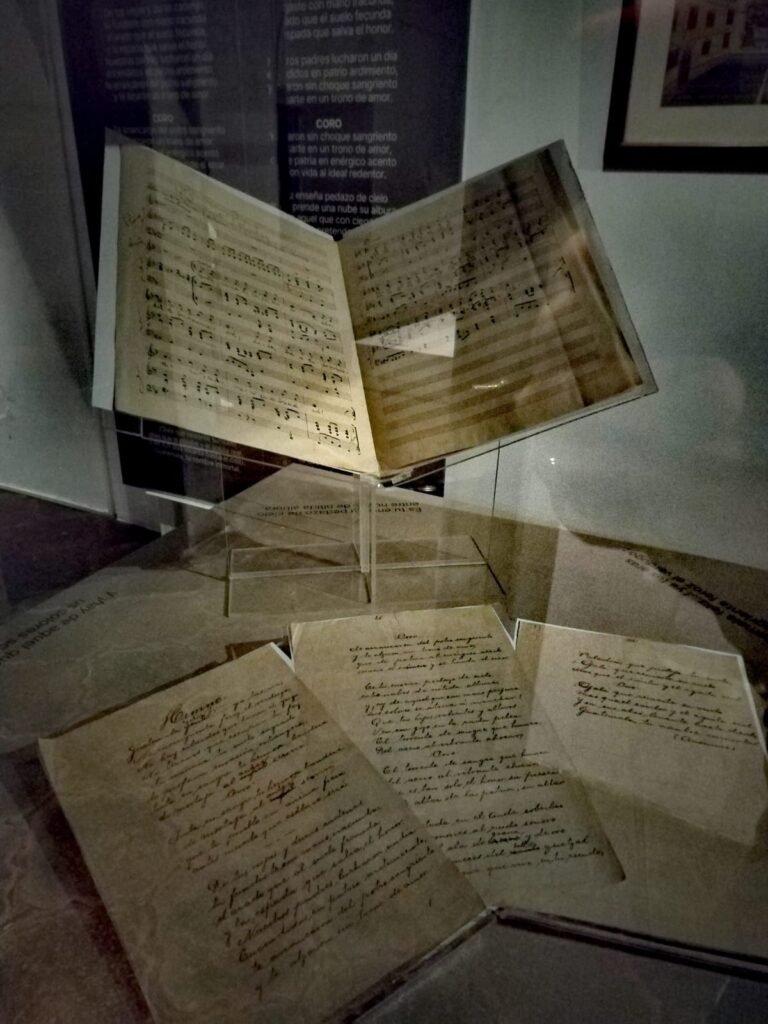
The National Anthem of Guatemala, commonly known by its opening words (“ Guatemala Feliz…!”), was originally written by the Cuban poet José Joaquín Palma and set to music by the Guatemalan maestro Rafael Álvarez Ovalle in the context of the Central American Exposition convened by the government of General José María Reina Barrios at the end of the 19th century. The lyrics were officially established in 1896 and the music was officially adopted in 1897. The lyrics were revised in 1934 by the pedagogue José María Bonilla Ruano to soften its warlike tone. (See sources (1), (2), (3), (4) below). 1
2. Key dates and legal/administrative framework
- 1896— The (original) lyrics that were initially published anonymously in the local cultural press are officially accepted. Wikipedia
- February 19, 1897— Date on which the music composed by Rafael Álvarez Ovalle is officially recognized (musical adoption certificate linked to the government competition). Wikipedia
- March 14, 1897— Public premiere at the Teatro Colón as part of the Central American Exposition program. Wikipedia
- 1910–1911— José Joaquín Palma reveals on his deathbed that he was the author of the lyrics, which until then had been circulated as “Anonymous.” The government honors both the author of the lyrics and the composer. Wikipedia+1
- 1934— The president Jorge Ubico orders a review of the lyrics; the pedagogue José María Bonilla Ruano makes modifications to eliminate overly bellicose phrases or references that were perceived as more closely linked to the author’s Cuban experience than to Central American independence. (The revised version enters official use.) Wikipedia+1
3. People and actors involved (detail)
- José Joaquín Palma (1844–1911)— Cuban poet and diplomat living in Guatemala; author of the original lyrics, which were initially presented as anonymous and only publicly confirmed around 1910–1911. His experience as a Cuban patriot influenced the martial tone of some of the original verses. Wikipedia+1
- Rafael Álvarez Ovalle (composer)— Guatemalan music maestro whose composition won the musical competition associated with the Central American Exposition; his music was premiered and officially adopted in 1897. hmdb.org+1
- José María Bonilla Ruano (pedagogue)— In 1934, he was commissioned to introduce modifications to the lyrics, with the aim of adapting them to the Guatemalan context and toning down the warlike rhetoric. Wikipedia+1
- José María Reina Barrios (organizing president)—His government convened the Central American Exposition and promoted the competition that culminated in the adoption of the anthem. Wikipedia
4. Origin, competition and premiere (chronology and cultural context)
The anthem was born within the framework of a cultural and civic initiative: the Central American Exposition of the End of the Century (organized by Reina Barrios). A competition was held to select an anthem to represent the nation at the exhibition; the lyrics initially appeared anonymously in cultural publications; the jury selected the work composed by Álvarez Ovalle and set to music for the anonymous poem. The first public performance took place at the Teatro Colón on March 14, 1897. Years later, the authorship of the lyrics by José Joaquín Palma was confirmed. Wikipedia+1
5. Text, structure and textual modifications
- Original version (1896): The lyrics, according to historical sources and contemporary editions, had a martial tone and expressions that some critics associated with Palma’s Cuban independence experience (wars of independence and resistance), so some of the language was judged too “bellicose” for Guatemalan civic comedy. Wikipedia
- Modification of 1934José María Bonilla introduced lexical and nuanced changes in at least some verses to emphasize civic values and fewer direct calls for armed struggle; this moderate version was the one consolidated in official use in the 20th century. anthems.fandom.com+1
- Publication of the score and lyrics: The lyrics and music were first printed in the cultural magazineThe Guatemalan Enlightenment, and then circulated in newspapers and official editions. Wikisource
6. Meaning and message of the hymn (analysis by verse)
The anthem combines calls for freedom, the defense of sovereignty, and civic pride. As an interpretive summary:
- Initial patriotic invocation: exalts the happiness of the homeland and warns against any attempt to desecrate its altars; it is a call to zeal for independence. Prensa Libre
- Call to defense: Several verses call for the defense of sacred land against a possible invasion, establishing the idea that the flag summons the people “to win or die.” This martial tone is part of what was later refined. Free press
- ChoirThe refrain underscores the people’s commitment to freedom and their willingness to prefer death to slavery (“I’d rather be dead than a slave”). This verse has remained one of the most powerful patriotic slogans in the anthem. Free press
7. Musical analysis (brief)
- Form and character:Álvarez Ovalle’s music follows late 19th-century European conventions for national anthems: martial rhythm, clear melody, and phrasing designed for choir and band. The orchestral accompaniment is designed to reinforce the rhythmic accents of the text and allow for both choral and instrumental performances at official events. hmdb.org+1
- Usual instrumentation and arrangements: Symphonically orchestrated versions, arrangements for military band, and choral adaptations are common; the piece can be performed both in solemn settings and in civic parades. Wikipedia
8. Official use, protocols and days of commemoration
- Interpretation at civic events: The anthem is performed at official ceremonies, school ceremonies, and commemorative events (such as Independence Day, September 15). There are rules, not always formally codified, regarding its performance (duration, use of the full chorus or refrain, etc.). Wikipedia
- Respect and decor: Like other symbols, its use should not be irreverent or commercialized in a way that degrades its national character; standard practice distinguishes solemn performances (full renditions) from abbreviated versions (chorus or verse and chorus). Wikipedia
9. Historical controversies and discussions
- Authorship and anonymity: The authorship of the lyrics remained unknown for years; Palma’s posthumous confession generated historiographical interest in his intentions and the origin of the literary expressions. Wikipedia+1
- Warlike tone vs. civic approach: The 1934 revision is a testament to political sensitivity: it was deemed necessary to temper the warlike tone—linked to Palma’s personal experience in the Cuban independence struggles—to adapt it to the Central American national narrative. This has given rise to debates about historical fidelity versus symbolic appropriateness. Wikipedia+1
10. Main sources cited in this dossier
Below are the most relevant sources that support what has been stated (these are the links as is so you can add them to your bibliography or notes):
- Wikipedia (en) — National Anthem of Guatemala.
https://es.wikipedia.org/wiki/Himno_Nacional_de_Guatemala Wikipedia - Wikipedia (en) — National anthem of Guatemala.
https://en.wikipedia.org/wiki/National_anthem_of_Guatemala Wikipedia - Wikisource — National Anthem of Guatemala(text and historical publications).
https://es.wikisource.org/wiki/Himno_Nacional_de_Guatemala Wikisource - Anthems / historical summaries (reviews and analysis of the 1934 amendment and the competition).
https://www.nationalanthems.info/gt.htm nationalanthems.info - Articles and reprints of the lyrics in national media (e.g. Prensa Libre / cultural learning).
https://www.prensalibre.com/vida/escenario/letra-del-himno-nacional-de-guatemala/ Free press - Biography and references about José Joaquín Palma.
https://en.wikipedia.org/wiki/Jos%C3%A9_Joaqu%C3%ADn_Palma Wikipedia - Notes on Rafael Álvarez Ovalle (historical reviews and musical records).
https://www.hmdb.org/m.asp?m=100386 hmdb.org