
Coat of Arms of Guatemala — Professional Dossier
1. Executive Summary
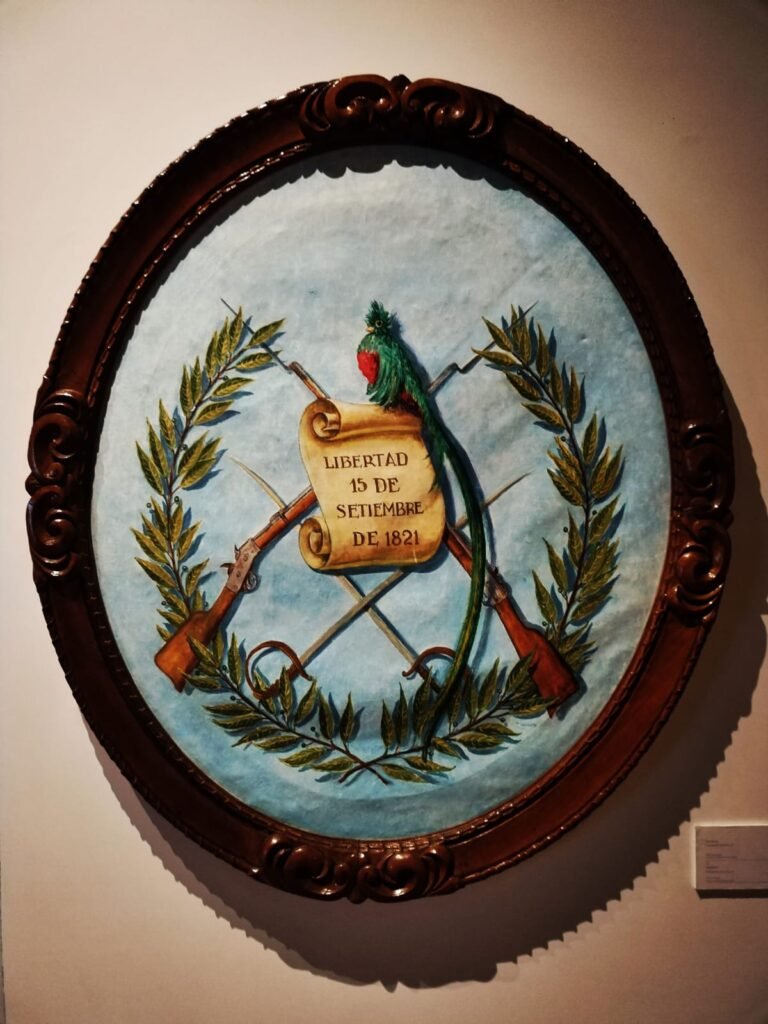
The current Coat of Arms of the Republic of Guatemala was adopted by Executive Decree No. 33 of November 18, 1871, during the government of General Miguel García Granados. It consists of the quetzal, a parchment with the date of independence, two rifles, two swords, and a laurel crown on a sky-blue field. These elements symbolize liberty, the immortalization of the independence date, the will to defend sovereignty, honor, and victory, respectively. The coat of arms has been regulated and adjusted in later decrees and laws (including the Governmental Agreement of 1968 and Legislative Decree 104-97). (1)(6)(7)
2. Legal Framework and Key Decrees
- Executive Decree No. 33 (November 18, 1871): formally decreed and described the Coat of Arms as used today (quetzal, parchment with the legend “LIBERTAD 15 DE SEPTIEMBRE DE 1821,” rifles, swords, and laurel). (1)(7)
- Governmental Agreement (September 12, 1968): regulated technical and stylistic details of the coat of arms (shade of sky-blue field, arrangement of elements). (0)(7)
- Legislative Decree No. 104-97 (October 28, 1997): Normative Law on the National Flag and the Coat of Arms; reaffirms the hierarchy of the symbol, usage regulations, and prohibitions (for example, it prohibits inscriptions on the flag and regulates reproduction of the coat of arms). Decree 104-97 is found in the official cultural repository and establishes the current legal basis for the emblem. (6)(2)
3. Origin and People Involved
- Miguel García Granados (President, 1871): promoter of the symbolic change after the Liberal Revolution; his government issued the decree that adopted the current coat of arms. (7)(5)
- Juan Bautista / Johann-Baptist Frener (engraver/innovator): historical and numismatic sources attribute the design or engraving of the motif (his name appears in the bibliography as Johann-Baptist Frener, a Swiss engraver residing in Guatemala, recognized as the material author of the design adopted in 1871). Some historical sources in Spanish call him Juan Bautista Frener. (0)(1)
- Liberal leaders of 1871 (Justo Rufino Barrios and allied groups): although the decree was formally signed during García Granados’ presidency, the symbolic reform was part of the liberal political project influenced by leaders such as Justo Rufino Barrios. (7)(5)
4. Technical Description and Elements (Detailed Breakdown)
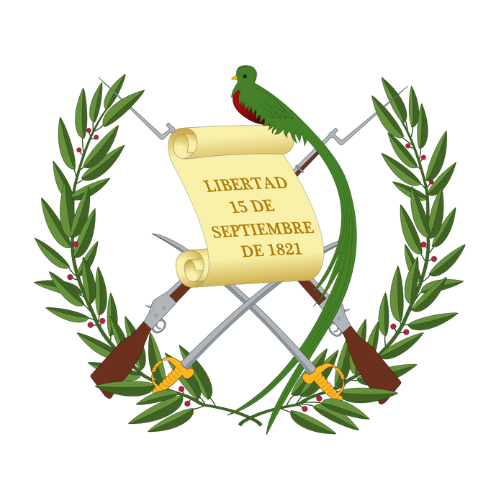
General description: the coat of arms (as it appears in the 1871 Decree and regulated versions) presents a sky-blue field in the center of which is a parchment inscribed with the commemorative legend, above which rests a quetzal; on the sides and behind are crossed two rifles and two swords, and the whole is surrounded or accompanied by laurel branches alluding to victory. (1)(3)
Elements and their official and interpreted meanings:
- Quetzal (Pharomachrus mocinno): symbolizes liberty and independence; tradition and law state that it is the supreme symbol of national freedom. The quetzal also carries strong pre-Hispanic and natural identity. (1)(12)
- Parchment with the inscription “LIBERTAD 15 DE SEPTIEMBRE DE 1821”: immortalizes the date of Central America’s independence from Spain; represents the legal foundation and the birth of the nation. (1)(6)
- Two rifles (Remington model, 1871 period): allude to the weapons used in the Liberal Revolution of 1871; symbolize the willingness to defend sovereignty and integrity when necessary. (1)(11)
- Two swords: represent honor, justice, and sovereignty; shown unsheathed and crossed in the traditional composition. (12)
- Laurel crown/branches: classical emblem of victory, triumph, and civic honor. (8)
- Sky-blue field (background): associated with ideals, the sky, and republican values; the sky-blue shade is descriptively specified in later decrees. (13)
5. Graphic Evolution and Historical Variations
- Previous coats of arms (19th century): between 1823–1871 there were several versions (during the Central American Federation, state governments, and conservative regimes) with different iconographies; from 1858–1871 a conservative iconography predominated, later replaced by the liberal version of 1871. (1)(3)
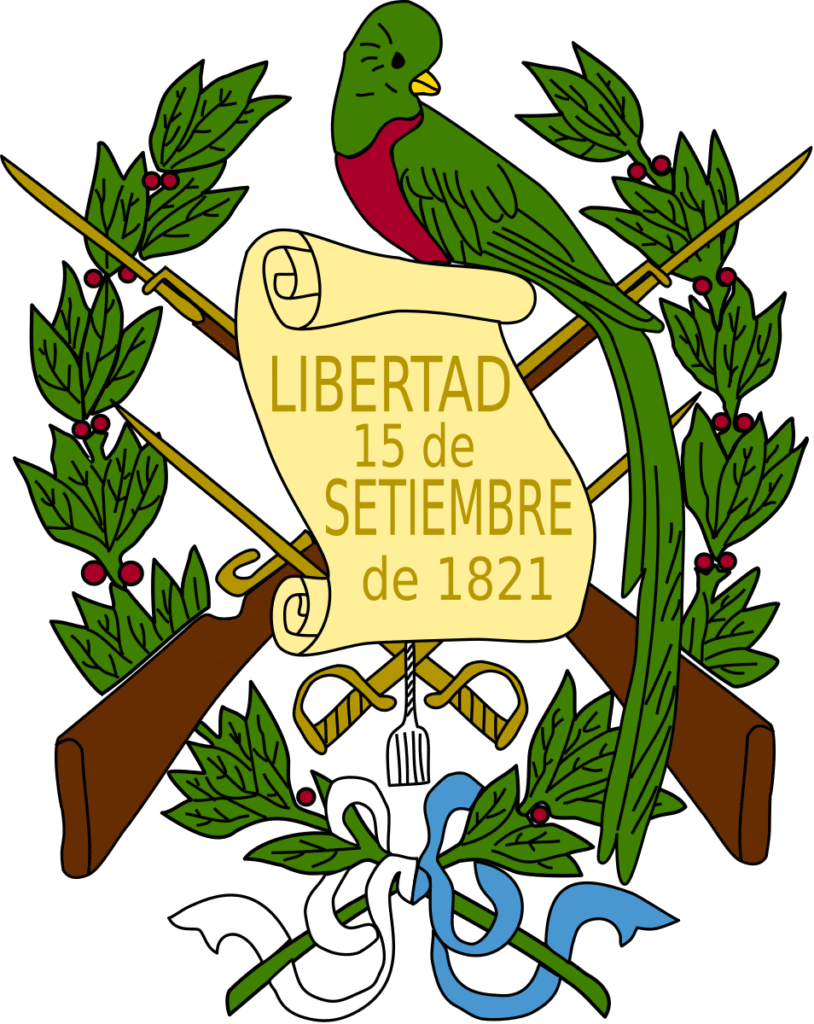
- Variants 1871–1968: small graphic differences in the laurel branch ribbon, the rendering of the weapons, and coloring. Historical archives and heraldic collections show that the coat of arms had a version with laurel branches tied with ribbon during the first period (1871–1968). (3)(8)
- Adjustments of 1968 and 1997: the Governmental Agreement of 1968 regulated colors and proportions of the set; in 1997 (Decree 104-97) legal adjustments and normalizations were incorporated (including orthographic corrections in the parchment legend in official versions). (0)(6)
6. Official Uses, Variants, and Protocol
- Use on the flag (pavilion): when the coat of arms appears on the white stripe of the flag, it is called the national pavilion; there are rules of precedence and placement in official ceremonies. (7)
- Independent version of the coat of arms: outside the flag, the coat of arms is reproduced with a sky-blue field; some institutional reproductions omit the field or simplify the outline (regulated by law to avoid improper use). (3)(6)
- Prohibitions and respect: the law prohibits degrading use or unauthorized additions; commercial or advertising reproduction is subject to rules respecting the national emblem. (6)
7. Numismatic Sources and Material Witnesses
- Commemorative engravings and coins: the commission to the mint and engravers (such as Johann-Baptist Frener) to commemorate the fiftieth anniversary of independence produced stamps and pieces documenting the graphic motif adopted in 1871. These numismatic pieces are cited in studies on Frener’s work. (0)(3)
8. Historiographic Interpretations and Political Meaning
- The iconographic change of 1871 is interpretable as part of the liberal project that sought to break with conservative and clerical iconographies of the previous period, establishing national emblems that spoke of liberty, sovereignty, and republican modernity. The emphasis on Remington rifles and the explicit mention of the independence date underscores both revolutionary memory and the historical legitimacy of the new regime. (7)(13)
9. Practical Recommendations (Reproduction and Use in Projects)
- Official reproduction: for formal reproductions (institutional use, flags, official stationery) consult the Governmental Agreement of 1968 and Decree 104-97 to confirm the correct version and requirements of color and arrangement. For color equivalences (Pantone / CMYK / RGB) coordinate with the Ministry of Culture or the Congress protocol office to obtain the approved guide. (0)(6)
- Museography and visual history: if you intend to exhibit the evolution of the coat of arms, include samples of previous coats (1820s–1871) and numismatic/medallic pieces from the 1870s showing Frener’s imprint and liberal iconography. (3)(5)
10. Bibliography and Sources Consulted (Main Selection)
The following are the sources consulted to prepare this dossier and that support the main statements:
- Wikipedia — “Coat of arms of Guatemala.” (0)
- Wikipedia (es) — “Escudo de Guatemala.” (1)
- Legislative Decree No. 104-97 — Normative Law of the National Flag and the Coat of Arms (SIC repository / official PDF). (6)
- CRW Flags / FOTW — Guatemala entry (history of decrees and description). (7)
- Prensa Libre — historical article “1871: se oficializa el Escudo de Armas de Guatemala.” (5)
- Wikimedia Commons — graphic archives of historical variants of the coat of arms. (3)
- Institutional and cultural sites (Congress of the Republic; Ministry of Culture) and civic outreach articles. (9)(12)