
Lake Atitlán
General Index — Lake Atitlán
1. General Introduction to Lake Atitlán
- General History
- Cultural and tourist importance
- Volcanic formation of the lake
- International recognition
2. Interesting Facts about Lake Atitlán
- Geographical curiosities
- Lake depth
- Volcanoes and legends
- Natural phenomena
- Mysteries and little-known facts
3. Cerro de Oro and “The Little Prince”
- Visual relationship between Cerro de Oro and the hat from “The Little Prince”
- Cultural theories and rumors
- Artistic and landscape influence
- History of Cerro de Oro
Cerro de Oro
4. Towns Surrounding the Lake
- List of towns around the lake
- Characteristics of each community
- Local Mayan culture
- Differences between peoples
Main towns
- Panajachel
- Santiago Atitlán
- San Pedro La Laguna
- San Juan La Laguna
- San Marcos La Laguna
- Santa Catarina Palopó
5. The “12 Villages” and the Apostles
- Popular tradition about the 12 villages
- Relationship with the apostles of Jesus
- Spanish colonial influence
- Religious symbolism around the lake
6. The Xocomil
- What is Xocomil
- Meteorological explanation
- Wind currents
- Influence on navigation and climate
- Cultural significance and Mayan legends
7. Sports and Adventure in Atitlán
- Kayak
- Paddleboard
- Paragliding
- Trail running
- Mountain biking
- Ascent to volcanoes
- Extreme sports
- Stories of international athletes
8. Homes of Famous People and Celebrities
- Rumors about Mel Gibson
- Private villas
- Luxury properties
- Expatriates and international entrepreneurs
- Atitlán as a private refuge
Mel Gibson
9. Important Tourist Themes for Tours
- Lake color changes
- Spiritual communities
- Local gastronomy
- Fauna and biodiversity
- Impact of international tourism
10. The Coffee of Atitlán
- High-rise coffee
- Volcanic soils
- Coffee farms
- Handcrafted production
- Export and specialty coffee
- Coffee tourism
11. Gastronomy of Lake Atitlán
- Traditional Mayan cuisine
- Pepián and jocón
- Lake fish
- Local markets
- International cuisine
- Coffee and cocoa
- Gastronomic tourism
12. Impact of International Tourism
- Tourism growth
- Local economy
- Cultural exchange
- Social networks and tourism
- Environmental problems
- Sustainable tourism
13. Fauna and Biodiversity
- Birds of the lake
- The Duck Poc
- Fish and fishing
- Forests and nature reserves
- Ecological problems
- Environmental conservation
Little
14. Geographic and Regional Information
- Population
- Lake size
- Altitude
- Geographic location
- Mayan languages
- Rivers
- Roads
- Water transport
- Trade routes
- Communication and technology
15. Samabaj — The Sunken Mayan City
- What is Samabaj?
- Archaeological discovery
- Roberto Samayoa Asmus
- The “Mayan Atlantis”
- Location under Lake Atitlán
- Origin and age of the site
- Structures found
- Ceramics and ceremonial objects
- Religious and ceremonial importance
- Underwater archaeology
- Theories about its flooding
- Volcanic and tectonic activity
- Scientific studies and research
- Heritage conservation and protection
- Lake Museum of Underwater Mayan Archaeology
- Mysteries and theories about Samabaj
- Cultural significance for Guatemala
- Documentaries and international recognition
Lake Atitlán: The Natural and Cultural Heart of Guatemala
Lake Atitlán is considered one of the most breathtaking tourist destinations in Central America and one of Guatemala’s most iconic natural landscapes. Surrounded by the majestic volcanoes Atitlán, Tolimán, and San Pedro, this volcanic lake combines nature, vibrant Mayan culture, adventure, and spirituality in one place. Travelers from around the world visit this Guatemalan gem every year, drawn by its deep waters, traditional villages, and the unique atmosphere found along its shores.
Where is Lake Atitlán located?
The lake is located in the department of Sololá, in the western highlands of Guatemala, approximately 2 hours and 30 minutes from Antigua Guatemala and about 3 hours from Guatemala City.
Its location nestled between volcanic mountains and Mayan villages makes it an ideal destination for both cultural and ecotourism. Furthermore, it is one of the main drivers of tourism and the economy in the western region of the country.
History and volcanic origin
Lake Atitlán was formed approximately 84,000 years ago after a massive volcanic eruption created a huge natural caldera. Over time, this caldera filled with water, forming the present-day lake, considered the deepest in Central America, with depths exceeding 300 meters.
Since pre-Hispanic times, the lake has been a sacred place for the Tz’utujil, Kaqchikel, and K’iche’ Maya peoples. These cultures have inhabited the region for more than two thousand years, maintaining ancestral traditions, textiles, spiritual ceremonies, and ways of life that still form part of the lake’s identity.
The name “Atitlán” comes from Nahuatl and is generally interpreted as “place of much water” or “between the waters”.
The towns around the lake
One of the greatest attractions of Lake Atitlán is the diversity of towns that surround it. Each one has its own personality, culture, and atmosphere.
Panajachel
Popularly known as “Pana,” it’s the main gateway to the lake. Here you’ll find hotels, restaurants, nightlife, artisan markets, and water transport docks. It’s one of the most visited places by both domestic and international tourists.
San Pedro La Laguna
Famous for its youthful and bohemian atmosphere, San Pedro attracts backpackers, Spanish students, and adventure lovers. From here, you can climb the San Pedro Volcano.
San Juan La Laguna
Renowned for its art galleries, murals, textile cooperatives, and sustainable cultural tourism, it is considered one of the most colorful and authentic towns on Lake Atitlán.
Santiago Atitlán
One of the towns with the richest Tz’utujil Maya culture. Here you will find the veneration of Maximón, a very important traditional spiritual figure within Guatemalan religious syncretism.
Santa Cruz La Laguna
Ideal for relaxation, yoga, boutique hotels and spectacular panoramic lake views.
Tourist activities
Lake Atitlán offers activities for different types of travelers:
- Boat trips between villages.
- Hiking and volcano climbing.
- Kayak y paddleboard.
- Mayan cultural tours.
- Spanish classes.
- Yoga and spiritual retreats.
- Photography and landscape observation.
- Purchases of textiles and handicrafts.
- Typical Guatemalan cuisine.
The volcanoes surrounding the lake offer some of the best panoramic views in Guatemala, although for certain routes it is recommended to hire certified local guides.
Mayan culture and traditions
The Atitlán region is one of the most important indigenous cultural centers in Guatemala. Many communities continue to use Mayan languages such as Tz’utujil and Kaqchikel, and also preserve traditional clothing and ancestral weaving techniques.
The artisan markets around the lake are famous for their handmade textiles, colorful embroidery, and art inspired by the Mayan worldview.
Nature and biodiversity
The lake and its surroundings form part of an important nature reserve, home to diverse species of birds, flora, and fauna. Pine and cypress forests surround much of the basin, creating unique ecosystems in the Guatemalan highlands.
Furthermore, the volcanic landscape makes Atitlán one of the most photographed places in the country and a world reference for nature tourism.
Environmental challenges
Despite its beauty, Lake Atitlán faces environmental problems related to pollution, wastewater, and waste management. Various community organizations and local cooperatives are currently working on recycling and conservation projects to protect this ecosystem, considered sacred by many Mayan communities.
Protecting the lake is essential to preserving both its biodiversity and the region’s tourism and cultural economy.
Why visit Lake Atitlán?
Visiting Lake Atitlán is to experience an extraordinary blend of volcanic nature, ancestral culture, and Guatemalan hospitality. The lake offers everything from tranquility and spirituality to adventure and social life, catering to different travel styles.
Many international travelers consider it one of the most beautiful places on the planet thanks to the combination of volcanoes, traditional villages and unique landscapes.
Useful links about Lake Atitlán
- Atitlán Guatemala – Official Tourist Information
- History of Lake Atitlán
- Guatemala.com – Lake Atitlán
- Wikipedia – Lake Atitlán
- Documentary video about the villages of the lake
10 Interesting Facts about Lake Atitlán
1. It is considered one of the most beautiful lakes in the world
The British writer and explorer Aldous Huxley described Lake Atitlán as “the most beautiful lake in the world.” Since then, thousands of travelers and photographers have considered it one of the most breathtaking natural landscapes on the planet.
2. It was formed by a gigantic volcanic eruption
The lake was formed approximately 84,000 years ago after a massive volcanic eruption that created a giant caldera. That explosion was one of the most powerful ever to occur in Central America.
3. It is more than 300 meters deep
Although there is no definitive exact measurement, some research indicates that Lake Atitlán could exceed 340 meters in depth, making it the deepest lake in Central America.
4. It is surrounded by three volcanoes
The volcanoes:
- Atitlán Volcano
- Tolimán Volcano
- San Pedro Volcano
They create one of Guatemala’s most iconic views and are visible from almost every town around the lake.
5. There is a submerged Mayan city underwater
At the bottom of the lake, the archaeological site of Samabaj, known as the “Mayan Atlantis,” was discovered. It is believed to have been a Mayan ceremonial island that became submerged after changes in water levels.
6. Each town has a completely different personality
Although they are all located around the same lake, each town has its own identity:
- Panajachel is more touristy.
- San Pedro La Laguna has a youthful and backpacker atmosphere.
- San Juan La Laguna is known for its art and textiles.
- Santiago Atitlán preserves strong Mayan traditions.
7. The lake has seismic and volcanic activity
The region lies on an active tectonic zone. Minor seismic activity is relatively common due to the area’s volcanic activity.
8. Many communities still speak Mayan languages
Around the lake, Mayan languages such as the following are still mainly spoken:
- Kissing
- Kaqchikel
- K’iche’
This makes Atitlán one of the most important indigenous cultural centers in Guatemala.
9. There is a spiritual figure called Maximón
In Santiago Atitlán, Maximón, a spiritual figure who blends Mayan and Catholic traditions, is venerated. Many people bring him cigarettes, alcohol, and money as offerings.
10. Sunrises and sunsets change every day
Due to the combination of volcanoes, humidity, altitude, and water reflections, the lake produces completely different sunrises and sunsets every day, something that photographers and travelers constantly seek.
Bonus: The lake inspired artists and travelers from all over the world
Lake Atitlán has inspired writers, photographers, artists, musicians, and travelers for decades. Many people arrive for a few days… and end up living in the region for months or years.
Why do they associate Cerro de Oro with The Little Prince?
The theory originates from the famous illustration at the beginning of the book:
“My drawing didn’t depict a hat. It depicted a boa constrictor digesting an elephant.”
Many people claim that the silhouette of Cerro de Oro looks very much like that image of the snake swallowing an elephant.
When you observe the hill from certain parts of the lake, especially near:
- Panajachel
- Santa Catarina Palopó
- Santiago Atitlán
The shape really resembles the original drawing from the book.
Did Saint-Exupéry ever visit Guatemala?
Yes. In 1938, Antoine de Saint-Exupéry was in a plane crash and subsequently spent time in Guatemala recovering. During his stay:
- He lived in Antigua Guatemala
- He traveled to Lake Atitlán several times
- He explored volcanoes, Mayan villages, and landscapes of the Guatemalan highlands.
This strengthened the idea that Guatemala was able to visually and emotionally influence parts of the work.
The “three volcanoes” theory
In the book, the Little Prince talks about how on his tiny planet he had:
- three volcanoes
- one of them turned off
Many Guatemalans associate this with the volcanoes around Lake Atitlán:
- Atitlán Volcano
- Tolimán Volcano
- San Pedro Volcano
Is it officially confirmed?
No.
It was never officially confirmed because Saint-Exupéry died in 1944 and never fully explained all his inspirations for writing the book.
That’s why it remains:
- a literary theory
- a Guatemalan cultural legend
- one of the most beautiful stories related to Atitlán
Some researchers believe there was Guatemalan inspiration, while others think it’s just a visual coincidence.
Something interesting
Many French tourists who visit Atitlán are surprised when they see Cerro de Oro for the first time, because the resemblance to the drawing in the book is quite strong.
Also, in Guatemala:
- hotels
- cafés
- tours
- murals
- festivals
They have used the connection between Atitlán and El Principito as part of the lake’s tourist and cultural identity.
Interesting links
- History of Cerro de Oro and The Little Prince
- The relationship between Guatemala and The Little Prince
- Article about Cerro de Oro and the inspiration for the book
Towns around Lake Atitlán
Lake Atitlán is surrounded primarily by towns in the department of Sololá, each with its own distinct culture, Mayan language, lifestyle, and tourist atmosphere. Traditionally, these towns are recognized for their…11 main towns around the lake:
- Panajachel
- Santa Catarina Palopó
- Saint Anthony the Palopó
- San Lucas Tolimán
- Santiago Atitlán
- San Pedro La Laguna
- San Juan La Laguna
- San Pablo La Laguna
- San Marcos La Laguna
- Tzununa
- Santa Cruz La Laguna
Other important towns and communities
Besides the more well-known towns, there are small communities and villages that are frequently visited:
- Jaibalito
- Santa Clara La Laguna
- San Jorge La Laguna
- San Andrés Semetabaj
- Saint Bonaventure
What characterizes each people?
- Panajachel→ main tourist and commercial center.
- San Marcos La Laguna→ spirituality, yoga and retreats.
- San Pedro La Laguna→ nightlife, backpackers and Spanish schools.
- San Juan La Laguna→ art, textiles and sustainable culture.
- Santiago Atitlán→ Tz’utujil and Maximón Mayan tradition.
- Santa Catarina Palopó→ famous for its painted houses and panoramic views.
- Santa Cruz La Laguna→ boutique hotels and tranquility.
- Saint Anthony the Palopó→ traditional ceramics and textiles.
- San Lucas Tolimán→ agriculture and access to the Tolimán Volcano.
Curious fact
Many towns around the lake were historically more connected by boat than by road. Even today, public boats remain one of the fastest and most traditional ways to travel between communities around Lake Atitlán.
For many years people spoke of the “12 towns of the lake,” and many people relate that number to the 12 apostles of Jesus because of the Catholic names that the towns received during the Spanish colonial era.
Why do almost all towns have the names of saints?
When the Spanish arrived in Guatemala in the 16th century, they began the process of evangelizing the Mayan peoples. Many indigenous communities received:
- Christian names
- names of saints
- names related to apostles or religious figures
That’s why around the lake we find names like:
- Saint Peter
- Saint John
- Saint Paul
- Santiago
- San Lucas
- Santa Catarina
- Holy Cross
- Saint Anthony
Most also retain their original Mayan identity, mainly Tz’utujil and Kaqchikel.
The idea of the “12 villages”
Traditionally, many people talked about:
“The 12 villages around the lake.”
There is no single official historical list, because it depends on which communities were considered major towns at any given time. But culturally, it did become very popular to associate them with the 12 apostles.
The most commonly mentioned list included:
- Panajachel
- Santa Catarina Palopó
- Saint Anthony the Palopó
- San Lucas Tolimán
- Santiago Atitlán
- San Pedro La Laguna
- San Juan La Laguna
- San Pablo La Laguna
- San Marcos La Laguna
- Santa Cruz La Laguna
- San José Chacayá or sometimes Tzununá
- Sololá or some neighboring community according to local tradition
Over time, some villages grew, others changed administratively, and today many people speak of 11 main villages around the lake, while others still use the tradition of the 12 villages.
Relationship between the Mayan worldview and Christianity
Something very interesting is that a strong syncretism occurred in Atitlán:
- ancestral Mayan traditions
- Spanish Catholic religion
- modern indigenous spirituality
That’s why figures like these exist:
- Maximón
- Mayan ceremonies
- colonial churches
- religious brotherhoods
everything coexisting around the lake.
Curious fact
Many historians and local tour guides say that the relationship with the 12 apostles was not always official, but it did become an important part of the popular and tourist imagination of Atitlán.
Even today, some elders in the region still refer to the lake as:
“The Lake of the Twelve Villages.”
That gives Atitlán even more mysticism and cultural identity.
Xocomil: The legendary wind of Lake Atitlán
He XocomilIt is a meteorological phenomenon characteristic of Lake Atitlán, known for generating strong winds, intense waves and abrupt changes in the lake’s climate, especially during the afternoons.
Although it is part of the cultural and spiritual identity of Atitlán, the Xocomil also has a scientific explanation related to the geography and atmospheric behavior of the region.
What does “Xocomil” mean?
The word “Xocomil” comes from the Kaqchikel Mayan language and is commonly interpreted as:
“The wind that carried sin”
the
“The wind that carried away the sins.”
In the oral traditions of the lake, many people describe it as a mysterious and powerful wind that suddenly appears over the waters of Atitlán.
Scientific explanation of Xocomil
From a meteorological point of view, the Xocomil occurs due to a combination of factors:
- temperature differences between the water and the mountains
- downward air currents
- moisture accumulation
- tunnel effect between volcanoes and mountains
- rapid changes in atmospheric pressure
During the day, the sun heats the mountain slopes around the lake. The warm air rises, and later, cooler downdrafts descend from the mountains and volcanoes.
The shape of the volcanic lake basin acts as a kind of natural funnel, accelerating the winds. As a result:
- the water begins to churn rapidly
- strong waves appear
- sudden storms form
- visibility decreases
This phenomenon usually intensifies between midday and the early afternoon.
Why is the Xocomil dangerous?
Xocomil can be dangerous because:
- generates unexpectedly large waves
- It makes navigation difficult for small boats.
- It causes climate changes in a few minutes.
- can considerably reduce the stability of the lake
For this reason, many local boatmen and fishermen have specific schedules for sailing and tend to avoid certain routes during the strongest afternoons.
During rainy seasons, the phenomenon can become even more intense.
Cultural and spiritual significance
For many Mayan communities around Lake Atitlán, the Xocomil is not just a climatic phenomenon.
It is also considered:
- a spiritual force of the lake
- a purifying energy
- a manifestation of the sacred nature of Atitlán
Traditional stories describe the Xocomil as a lake spirit that:
- clean energy
- protects the lake
- Remember the power of nature
That’s why the phenomenon commands so much respect among locals and frequent travelers.
When does Xocomil occur?
Generally:
- between 12:00 PM and 4:00 PM
- especially during the rainy season
- stronger during climate change
Mornings in Atitlán are usually calm and clear, while afternoons have a higher probability of wind and storms.
Curious fact
Many travelers believe that Lake Atitlán “changes personality” during the Xocomil:
- In the morning it may seem completely calm
- and an hour later transform into a dark, windy, and dramatic lake
That duality is part of what makes Atitlán one of the most mystical and fascinating places in Guatemala.
Sports and Extreme Adventures at Lake Atitlán
Lake Atitlán is not only one of Guatemala’s most impressive landscapes; it has also become one of Central America’s top adventure and extreme sports destinations.
Thanks to its combination of:
- volcanoes
- mountains
- deep water
- strong winds
- nature trails
- cliffs
- microclimates
Lake Atitlán offers unique conditions for water sports, aerial activities, and mountain challenges that attract both tourists and international athletes.
Most popular water sports
Kayak
Kayaking is one of the most popular activities on the lake. Calm mornings allow you to explore:
- cliffs
- small beaches
- hidden villages
- nature reserves
The routes between:
- Panajachel
- Santa Cruz La Laguna
- Jaibalito
They are especially popular.
Paddleboard (SUP)
Stand-up paddleboarding (SUP) has become very popular in Lake Atitlán because of the calm waters in the mornings. Many travelers practice SUP at sunrise while watching the volcanoes reflected on the water.
Long distance swimming
The lake has been the setting for open water competitions and extreme endurance challenges due to:
- the altitude
- the water temperature
- the currents generated by the Xocomil
Swimming across the lake is considered a major challenge even for experienced athletes.
Extreme sports and adventure
Paragliding
The mountains surrounding the lake create excellent thermals for paragliding. Flights offer spectacular views of:
- the three volcanoes
- the Mayan peoples
- the entire lake from the air
Some international pilots consider Atitlán one of the most beautiful places to fly in Latin America.
Hiking and volcano climbing
The volcanoes:
- San Pedro Volcano
- Tolimán Volcano
- Atitlán Volcano
They are visited by mountaineers and adventurers from all over the world.
The ascent to the San Pedro Volcano is the most touristic, while Atitlán and Tolimán represent much more demanding physical challenges.
Mountain Bike
The mountain roads around the lake offer technical routes for mountain biking:
- rapid descents
- Mayan rural roads
- volcanic trails
- scenic routes
Many extreme tours connect several towns by bicycle.
The Xocomil and extreme sports
The famous Xocomil wind transforms the lake in the afternoons and creates extreme conditions for:
- navigation
- paddleboard
- kayak
- water sports
Many athletes take advantage of these climate changes for endurance and adventure training.
Famous athletes and feats in Atitlán
Cliff Jumping and international extreme athletes
Atitlán has been visited by international athletes from:
- cliff diving
- highlining
- trail running
- paragliding
- extreme kayaking
mainly attracted by the volcanic landscape and cliffs around the lake.
Although there is no permanent official Red Bull competition at the lake, photographers, documentary filmmakers, and sponsored athletes related to extreme sports and adventure have arrived.
Swimming records and lake crossings
Several Guatemalan and international athletes have performed:
- complete crossings of the lake by swimming
- night crossings
- open water endurance challenges
These feats are especially difficult because:
- the altitude of approximately 1,560 meters above sea level
- the Xocomil wind
- rapid climate changes
Trail Running y ultramaratones
Atitlán is also famous among trail runners. There are extreme routes that connect several towns and volcanoes around the lake, some used for:
- ultramaratones
- mountain races
- high-performance training
The combination of altitude and steep slopes makes the terrain very physically demanding.
International adventure tourism
Lake Atitlán currently attracts:
- adventurous backpackers
- extreme athletes
- professional photographers
- documentary filmmakers
- travel content creators
Many come seeking authentic experiences and dramatic landscapes that are hard to find elsewhere in the world.
Curious fact
Many drone pilots and audiovisual producers consider Atitlán one of the best places in Latin America to film adventure content because of:
- the visual depth of the lake
- the volcanoes
- the morning mist
- dramatic changes in light and weather
That’s why the lake appears constantly in:
- documentaries
- travel videos
- international tourism campaigns
- content about extreme sports and nature.
Homes of famous people and celebrities around Lake Atitlán
Lake Atitlán has attracted visitors for decades:
- artists
- businessmen
- writers
- musicians
- international celebrities
- retired millionaires
- audiovisual producers
primarily because of:
- your privacy
- unique volcanic landscapes
- spiritual energy
- temperate climate
- relatively low costs compared to exclusive destinations in the United States or Europe
Although many properties are extremely private and their owners prefer to remain discreet, there are stories, rumors, and some documented cases about international figures linked to the lake.
Does Mel Gibson own a house in Atitlán?
The story that Mel Gibson owns a house in Atitlán is very well known in Guatemala, especially among people involved in real estate and luxury tourism.
However:
- There is no solid public documentation that officially confirms that he currently owns a house on the lake
- It is confirmed that he has visited Guatemala several times and has a strong interest in Mayan culture and Guatemalan archaeology.
Mel Gibson has visited:
- Petén
- The Lookout
- Mayan archaeological sites
and has even supported archaeological research related to the Mayan civilization.
The confusion probably stems from:
- local rumors
- private tours of the lake
- luxury villa rentals
- friendships with foreign investors in Guatemala
Many inhabitants of the lake claim to have seen it in Atitlán on different occasions, but there are no official public records of a confirmed ownership.
Famous people and wealthy foreigners in Atitlán
Writers, artists and musicians
Since the 1960s and 70s, Atitlán became a popular destination for:
- hippie artists
- writers
- musicians
- photographers
- spiritual travelers
Many famous people have spent private time in towns like:
- San Marcos La Laguna
- Santa Cruz La Laguna
- Jaibalito
due to the bohemian and isolated atmosphere.
Foreign businessmen and millionaires
Around the lake there are:
- hidden private villas
- properties accessible only by boat
- luxury eco-resorts
- exclusive spiritual retreats
Many belong to:
- American businessmen
- European pensioners
- Canadian investors
- audiovisual producers
Some particularly exclusive areas are:
- the route between Santa Cruz and Tzununá
- Jaibalito’s private parts
- mountainous areas above San Marcos
Discovery Channel and famous lake houses
Several luxury homes in Atitlán have appeared in:
- architecture programs
- international journals
- design documentaries
A famous residence known as “The Lake House” even appeared on international television programs related to luxury architecture.
These properties are usually notable for:
- eco-friendly design
- integration with the mountain
- panoramic views
- private access to the lake
Why do celebrities seek out Atitlán?
Privacy
Many properties:
- They have no road access
- It can only be reached by boat
- They are hidden among volcanic vegetation
This creates a level of privacy that is very rare in international tourist destinations.
Spiritual energy and nature
Atitlán is internationally famous for:
- spiritual retreats
- meditation
- yoga
- Mayan ceremonies
- alternative communities
That’s why many celebrities discreetly visit the lake seeking to disconnect.
Famous stories and rumors about the lake
Among the best-known stories surrounding Atitlán are:
- Hollywood actors staying in private villas
- Musicians recording creative material at the lake
- Millionaires buying entire waterfront properties
- artists living anonymously for extended periods
Much of this remains a rumor because:
- Local communities generally respect privacy.
- Many properties are registered under companies
- Luxury in Atitlán tends to be more discreet than in other destinations
Curious fact
Some of the most impressive features of the lake:
- They don’t appear on Google Maps
- They do not have a public address.
- and can only be seen from a boat or drone
That has helped Atitlán maintain a certain reputation as a “secret refuge” for famous people, artists, and high-profile travelers.
5 Interesting Topics about Lake Atitlán
1. Why does the lake water change color?
Many tourists notice that the lake constantly changes between:
- deep blue
- turquoise
- gray
- dark green
This happens because:
- extreme depth
- volcanic minerals
- reflections of the sky
- water movement
- position of the sun
- presence of clouds and fog
The lake functions almost like a giant volcanic mirror.
Interesting fact:
On calm days, volcanoes can be perfectly reflected on the water.
2. Why does Atitlán attract so many spiritual communities and expatriates?
Especially in San Marcos La Laguna there is a large international community focused on:
- yoga
- meditation
- holistic therapies
- spiritual retreats
- sustainable living
Many people believe that Atitlán has a special energy because of:
- its volcanoes
- its volcanic origin
- Mayan culture
- the tranquility of the lake
That’s why some people come for vacation… and end up living there for years.
3. What do families around the lake traditionally eat?
The local cuisine blends:
- Mayan cuisine
- volcanic ingredients of the high plateau
- colonial traditions
Common dishes:
- pepian
- jocon
- tamales
- handmade tortillas
- lake fish
- avocado and local corn
You can also mention the famous:
- Atitlán coffee
considered one of the best high-altitude coffees in Guatemala thanks to the volcanic soil.
4. What animals live in and around the lake?
Atitlán has a very rich biodiversity:
- herons
- hummingbirds
- eagles
- native fish
- small reptiles
- migratory birds
There used to be a very famous bird called:
- the Atitlán diver
also known as:
“Little”
Little
It was a bird endemic to the lake and today it is practically extinct due to pollution and introduced species.
That fact often has a big impact on foreign tourists.
5. How did international tourism affect the lake?
Tourism completely transformed the economy of Atitlán.
Previously, many communities relied primarily on:
- agriculture
- fishing
- textiles
Today, much of the economy revolves around:
- hotels
- restaurants
- tours
- withdrawals
- languages
- until
- real estate
You can mention that Atitlán has become one of Guatemala’s most international destinations and currently receives visitors from:
- USA
- Canada
- Europe
- Israel
- Latin America
including many tourists from Costa Rica who often feel a connection to the volcanic nature and climate of the place.
The Coffee of Atitlán: Tradition, Volcanoes and the Aroma of Guatemala
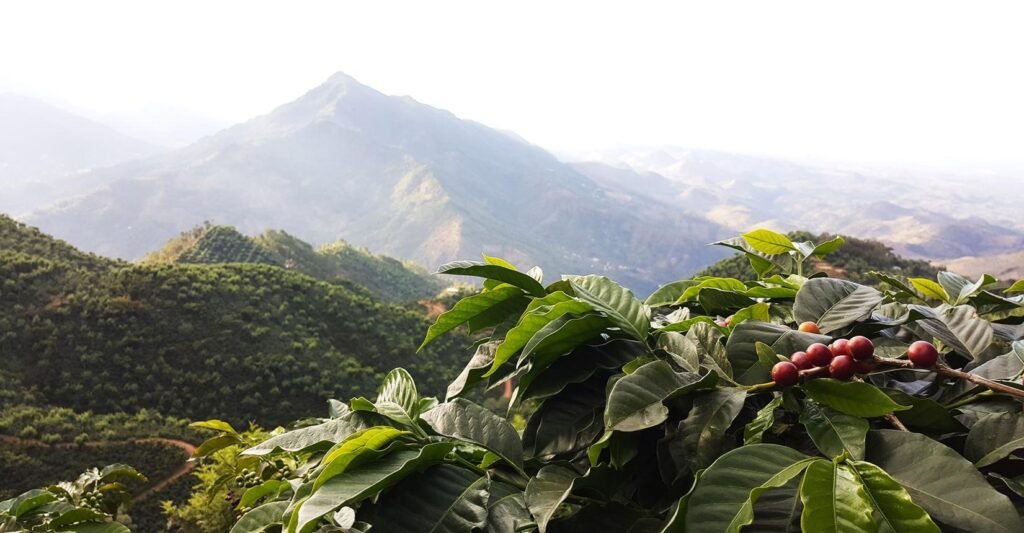
The coffee produced around Lake Atitlán is considered one of the most exceptional high-altitude coffees in Guatemala and the world. Thanks to its volcanic soils, unique microclimates, and agricultural traditions passed down through generations, the Atitlán region produces beans internationally recognized for their aromatic profile, complexity, and premium quality.
Coffee is not only part of the local economy; it also represents culture, identity, and a deep connection between the Mayan communities and the volcanic land surrounding the lake.
Why is Atitlán coffee so special?
The Atitlán region has almost perfect conditions for growing specialty coffee:
- Altitudes between 1,200 and 2,000 meters.
- Extremely fertile volcanic soils.
- Temperate climate for most of the year.
- Humidity generated by the lake.
- Natural shade from native trees.
- Minerals originating from historical volcanic activity.
The volcanoes:
- Atitlán Volcano
- Tolimán Volcano
- San Pedro Volcano
They directly influence the soil composition and microclimate of the plantations.
The result is a coffee known for:
- bright acidity
- balanced body
- floral notes
- chocolate
- citrus fruits
- caramel
- walnuts
(Anacafé)
History of coffee in Atitlán
Coffee arrived in Guatemala during the colonial period, but it was in the 19th century that it began to expand strongly in the western highlands.
The communities around Atitlán found in coffee:
- a major source of income
- international trade
- agricultural employment
- regional development
Over time, many Kaqchikel and Tz’utujil Mayan families became involved in:
- crop
- harvest
- drying
- artisanal coffee processing
Currently, coffee remains one of the most important economic pillars of the region.
Specialty coffee and artisanal production
In recent years, Atitlán has become an important region for specialty coffee and premium exports.
Many producers work with:
- artisanal processes
- manual harvest
- controlled fermentation
- natural drying
- sustainable methods
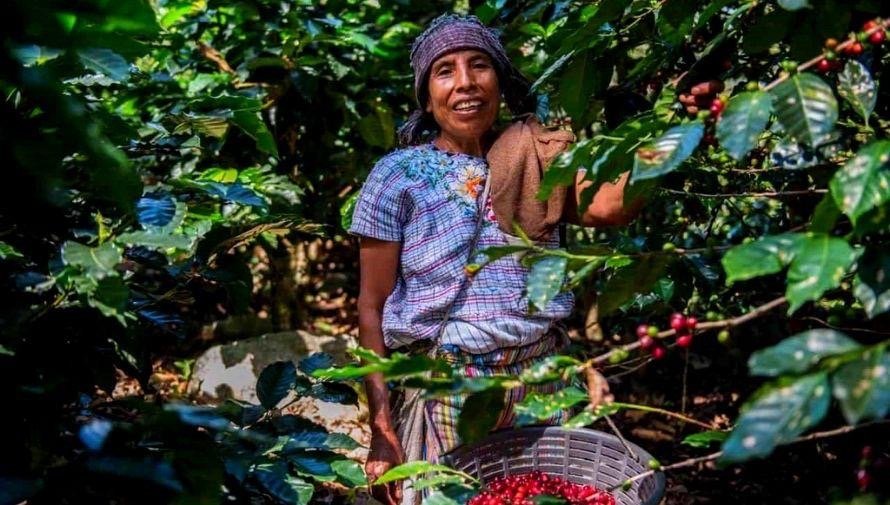
Coffee cherries are usually harvested by hand, selecting only the ripe fruits, which is essential to maintain high quality.
Some small farms produce microlots sold to:
- specialty coffee shops
- barista championships
- international gourmet markets
The coffee farms around the lake
The most renowned coffee-producing areas around the lake include:
- San Juan La Laguna
- San Pedro La Laguna
- San Lucas Tolimán
- Santa Catarina Palopó
Many indigenous cooperatives produce organic and sustainable coffee using traditional techniques combined with modern export methods.
Coffee tourism in Atitlán
Coffee also became an important part of tourism in Atitlán.
Visitors can:
- coffee tours
- tours on farms
- professional tastings
- barista workshops
- collection experiences
Many international tourists consider these experiences one of the best ways to learn about the local culture and rural life around the lake.
Coffee and Mayan culture
In many Mayan communities, coffee represents:
- family work
- agricultural tradition
- community heritage
- spiritual connection with the earth
Small farms are usually managed by families who have worked with coffee for generations.
In addition, numerous women’s cooperatives are currently involved in:
- production
- toasted
- export
- community tourism
Coffee challenges in Atitlán
Although Atitlán coffee is recognized worldwide, producers face significant challenges:
- climate change
- pests such as rust
- international price fluctuations
- environmental pollution
- labor migration
Despite this, many communities are opting for:
- organic coffee
- fair trade
- sustainable tourism
- direct export
as ways to protect both the local economy and the environment.
International recognition
6
Atitlán coffee is part of the coffee-growing regions officially recognized by Anacafé and regularly appears in:
- international competitions
- specialty coffee shops
- rankings gourmet
- premium exports
Many experts believe that Guatemala produces some of the most complex and elegant coffees in the world, and Atitlán is one of the country’s most representative regions.
Curious fact
Many travelers say that drinking coffee at sunrise in front of Lake Atitlán, watching the volcanoes reflected in the water, is one of the most memorable experiences one can have in Guatemala.
Useful links about Atitlán coffee
- Anacafé – Atitlán Region
- Guatemala Coffee – Atitlán Region
- Specialty Coffee Association
- Coffee tours in Atitlán
What
The Gastronomy of Lake Atitlán: Mayan Tradition, Volcanic Ingredients and International Cuisine
The cuisine around Lake Atitlán is one of Guatemala’s richest and most authentic cultural expressions. The region combines:
- ancestral Mayan culinary traditions
- fresh ingredients grown in volcanic soil
- colonial recipes
- contemporary international cuisine
Thanks to international tourism and the cultural diversity of the towns around the lake, Atitlán has become one of the most interesting gastronomic destinations in Central America.
The Mayan influence on the cuisine of Atitlán
The basis of the local gastronomy comes from traditional Mayan cuisine, where corn occupies a central place both nutritionally and spiritually.
The most important ingredients historically have been:
- corn
- bean
- chile
- tomato
- local herbs
- avocado
- cacao
Many families still cook using:
- traditional griddles
- wood stoves
- manual mills
- recipes passed down through generations
In Tz’utujil and Kaqchikel communities, food continues to be an important part of ceremonies, family gatherings, and religious festivities.
Typical dishes around the lake
Pepian
Pepian is one of Guatemala’s most representative dishes and very common in Lake Atitlán. It is prepared with:
- thick tomato and chili sauce
- roasted seeds
- spices
- chicken, beef or pork
- vegetables
It is considered one of the oldest stews in Guatemalan cuisine.
Jocon
The jocón stands out for its intense green color, made with:
- green tomato
- cilantro
- miltomate
- onion
- chicken
It is usually served with rice and freshly made tortillas.
Lake fish
For decades the lake was an important source of fish for local communities.
Tilapia is currently one of the most consumed fish and is usually served:
- fried
- with garlic
- in soup
- served with vegetables and rice
Tamales and dobladas
Guatemalan tamales are an essential part of celebrations and family gatherings.
They are also popular in Atitlán:
- folded
- chuchitos
- little stuffed ones
- toast
which are usually found in markets and street stalls.
Coffee and cocoa from Atitlán
The region is famous for its high-altitude coffee grown in volcanic soil.
Many cafes around the lake work with:
- local grains
- artisanal methods
- specialty roast
- professional barista
There is also a growing artisanal production of:
- chocolate
- organic cocoa
- traditional Mayan drinks
(Anacafé)
International influence in Atitlán
Due to the arrival of tourists and international expatriates, especially since the 1970s, Atitlán developed a very diverse gastronomic scene.
Today it is possible to find:
- Italian cuisine
- Japanese
- vegetarian
- vegan
- Mediterranean
- Mexican
- fusion food
Especially in:
- Panajachel
- San Pedro La Laguna
- San Marcos La Laguna
There is a wide variety of international restaurants and boutique cafes.
Traditional markets and street food
The markets around the lake are an essential part of the culinary experience.
They include:
- fresh fruit
- mountain vegetables
- freshly made tortillas
- typical food
- spices
- medicinal herbs
- homemade sweets
The Sololá market is one of the most famous in the Guatemalan highlands.
Sustainable and organic gastronomy
Atitlán also became an important center for:
- organic farming
- sustainable kitchen
- “farm to table” movements
- healthy eating
Many restaurants work with:
- local products
- organic vegetables
- artisanal coffee
- ingredients produced by Mayan cooperatives
Gastronomic experiences for tourists
Visitors can enjoy:
- gastronomic tours
- Mayan cooking classes
- coffee tastings
- experiencias farm-to-table
- lakeside dinners
- community markets
Many travelers consider Atitlán’s gastronomy to be a perfect blend of ancestral tradition and modern creativity.
Gastronomy and culture
The food in Atitlán represents not only flavor; it also represents:
- cultural identity
- family work
- ancestral agriculture
- community exchange
- spiritual connection with the volcanic earth
Each town on the lake has slight culinary variations related to:
- local Mayan language
- available ingredients
- family traditions
- religious festivities
Curious fact
Many international travelers consider having breakfast overlooking Lake Atitlán, gazing at the volcanoes, while sipping fresh Guatemalan coffee, to be one of the most memorable gastronomic experiences in all of Central America.
Useful links about gastronomy in Atitlán
- Anacafé – Atitlán Region
- Guatemala.com – Guatemalan Gastronomy
- Atitlán Living – Restaurants and cafes
- Inguat Guatemala
The Impact of International Tourism on Lake Atitlán
Lake Atitlán has become one of the most important tourist destinations in Guatemala and all of Central America. Its combination of volcanoes, Mayan villages, vibrant culture, and spectacular landscapes has attracted travelers from all over the world for decades.
International tourism has profoundly transformed the economy, culture, and lifestyle of the communities around Lake Atitlán. Today, Atitlán is a place where:
- ancestral Mayan traditions
- global tourism
- international communities
- local businesses
- spiritual retreats
- international gastronomy
- adventure tourism
This transformation has brought significant benefits, but also new social and environmental challenges.
The growth of tourism in Atitlán
Tourism began to grow strongly in Atitlán from:
- the 60s and 70s
- the arrival of European and American travelers
- the international hippie movement
- interest in Mayan culture
- the rise of ecotourism and backpacking
Over time, towns like:
- Panajachel
- San Pedro La Laguna
- San Marcos La Laguna
- San Juan La Laguna
They began to develop:
- hotels
- hostels
- restaurants
- Spanish schools
- crop rotations
- spiritual retreats
- international cafes
Today Atitlán receives visitors from:
- USA
- Canada
- Europe
- Israel
- South America
- Central America
and is considered one of Guatemala’s main tourist destinations.
Positive economic impact
Tourism has generated thousands of jobs around the lake in sectors such as:
- hotel industry
- gastronomy
- water transport
- tour guides
- handcrafted textiles
- café
- until
- construction
- real estate
Many Mayan families found new economic opportunities thanks to:
- artisan cooperatives
- cultural tourism
- cooking classes
- textile workshops
- community tours
Especially in San Juan La Laguna, tourism helped to boost sustainable projects focused on:
- natural dyes
- Mayan art
- traditional textiles
- honey and coffee production.
Cultural exchange
International tourism transformed Atitlán into a multicultural space.
Many visitors arrive looking for:
- authentic experiences
- living Mayan culture
- spirituality
- learning Spanish
- connection with nature
This generated cultural exchange between:
- indigenous communities
- foreign travelers
- artists
- international entrepreneurs
It is currently common to find:
- international cafes
- global cuisine restaurants
- yoga studios
- art galleries
- meditation centers
mixed with traditional markets and Mayan ceremonies.
The rise of San Marcos and the spiritual communities
San Marcos La Laguna became especially famous among international communities interested in:
- yoga
- meditation
- holistic therapies
- spiritual retreats
- alternative life
Many foreigners ended up living permanently around the lake, creating a very particular cultural mix that distinguishes Atitlán from other tourist destinations in Central America.
Tourism and social media
In recent years, social networks such as:
- TikTok
- YouTube
have greatly increased the popularity of Atitlán.
Images from:
- volcanoes
- sunrises
- lakeside cafes
- murals
- boutique hotels
- docks
They went viral internationally, attracting even more visitors.
Many content creators consider Atitlán one of the most photogenic places in Latin America.
Problems and challenges of tourism
Although tourism has economically benefited many communities, it has also generated significant problems:
- lake pollution
- increased garbage
- pressure on infrastructure
- price increase
- disordered urban growth
- partial loss of traditions
- gentrification in some towns
Some residents and travelers criticize:
- overconstruction
- tourist saturation
- privatization of natural areas
- cleaning and waste management problems.
Sustainable tourism efforts
4
Faced with these challenges, multiple initiatives emerged focused on:
- recycling
- environmental conservation
- community tourism
- organic farming
- cultural protection
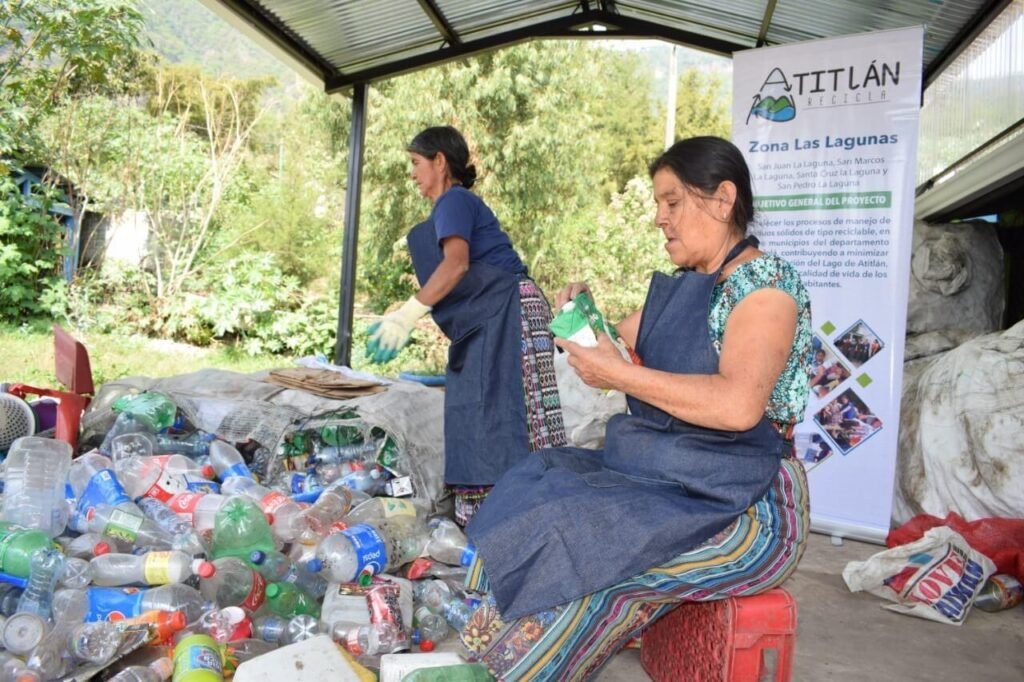
One of the best-known projects is the work of recycling cooperatives led by indigenous women around the lake, dedicated to reducing pollution and protecting the ecosystem.
Cultural tourism and authentic experiences
Currently, there is a strong trend towards cultural and responsible tourism, where visitors seek:
- living with local communities
- learn about Mayan textiles
- participate in craft workshops
- take traditional cooking classes
- learn about Mayan ceremonies and worldview
This has allowed many ancestral traditions to remain alive and generate income for local families.
The future of tourism in Atitlán
The great challenge for Atitlán is to find a balance between:
- economic growth
- environmental conservation
- cultural identity
- sustainable tourism development
Many local communities and organizations believe that protecting the lake and Mayan culture will be essential to maintaining Atitlán’s unique appeal in the future.
Curious fact
Many travelers arrive in Atitlán planning to stay for a few days… and end up living for months or even years around the lake due to the unique combination of:
- nature
- culture
- international community
- tranquillity
- and alternative lifestyle.
Useful links about tourism in Atitlán
- Atitlán, Guatemala
- Inguat Guatemala
- Atitlán Living
- Cultural Tourism in Atitlán
- Academic article on tourism in Atitlán
The Fauna of Lake Atitlán: Biodiversity, Endemic Species and Conservation
Lake Atitlán is not only famous for its volcanoes and Mayan culture; it also represents one of Guatemala’s most important and unique ecosystems. Surrounded by volcanic mountains, cloud forests, and indigenous communities, the lake is home to a great diversity of birds, fish, reptiles, and species adapted to the special conditions of the Guatemalan highlands.
The combination of:
- altitude
- temperate climate
- humidity
- volcanic origin
- microclimates
has allowed the development of a very particular biodiversity around the lake.
A unique volcanic ecosystem
Lake Atitlán is located approximately 1,560 meters above sea level and is surrounded by:
- pine forests
- cypress trees
- subtropical vegetation
- agricultural areas
- nature reserves
The volcanoes:
- Atitlán Volcano
- Tolimán Volcano
- San Pedro Volcano
They create different microclimates that favor the presence of multiple animal and plant species.
The most representative birds of the lake
Herons and waterfowl
Among the most common birds around the lake are:
- white herons
- blue herons
- kingfishers
- wild ducks
- zopilote
- hawks
- hummingbirds
Many migratory birds also use Atitlán as a resting point during certain seasons of the year.
Birdwatching has become an important tourist activity in several nature reserves around the lake.
The legendary “Pato Poc”
The most famous species associated with Atitlán was the:
Pato Poc
the
Atitlán Grebe
Pato Poc
Its scientific name was:
Podilymbus gigas
It was an aquatic bird endemic to the lake, meaning it did not exist anywhere else in the world.
The Little:
- I couldn’t fly
- I lived among the reeds
- It fed on small fish and crustaceans
- It was a natural symbol of the lake.
Unfortunately, it was officially declared extinct in the 1980s due to:
- pollution
- habitat destruction
- introduction of invasive species
- fishing nets
- growth in tourism and water traffic
Ecologist Anne LaBastille spent more than 25 years trying to save the species and documented its disappearance.
Fish from Lake Atitlán
Currently, the most common fish in the lake include:
- tilapia
- black wolf
- carpas
- small native fish
Artisanal fishing is still an important part of the economy of some communities.
However, several introduced species considerably altered the original ecological balance of the lake, affecting endemic species such as the Poc.
Reptiles and small mammals
The forests and mountains around Atitlán are also home to:
- lizards
- small non-venomous snakes
- squirrels
- raccoons
- bats
- wild rabbits
Many species live primarily in wooded areas near nature reserves and volcanoes.
Butterflies, bees and pollinators
Thanks to its temperate climate and floral biodiversity, Atitlán is also home to:
- tropical butterflies
- native bees
- hummingbirds
- pollinating insects
These animals are essential for:
- agriculture
- café
- fruit production
- forest ecosystems
Nature reserves and conservation
Several organizations are currently working on:
- environmental conservation
- reforestation
- lake cleaning
- species protection
- ecological education
The nature reserves around the lake help to protect:
- migratory birds
- native forests
- ecological trails
- volcanic ecosystems
Current environmental problems
The biodiversity of Lake Atitlán faces significant threats:
- pollution
- sewage
- urban growth
- invasive species
- deforestation
- tourist pressure
Local residents and environmental organizations have expressed concern about the ecological future of the lake.
Ecotourism and nature observation
Currently, many travelers visit Atitlán to:
- bird watching
- nature photography
- ecological hiking
- kayak
- exploration of nature reserves
Sustainable ecotourism is considered one of the best ways to protect the ecosystem while generating income for local communities.
Curious fact
Many older inhabitants of the lake still remember hearing the distinctive sound of the Poc on the water during the calm mornings in Atitlán.
Although the bird disappeared, it remains one of the most important ecological and cultural symbols of Guatemala’s natural history.
Useful links about wildlife and nature in Atitlán
- History of the Poc Duck in Guatemala
- The Atitlán Grebe – EarthSonic
- Scientific analysis of the Poc Duck
- Atitlán Nature Reserve
- Inguat Guatemala
Samabaj: The Submerged Mayan City of Lake Atitlán
Beneath the deep waters of Lake Atitlán lies one of Central America’s most fascinating archaeological discoveries: Samabaj, an ancient submerged Mayan ceremonial city known internationally as the “Mayan Atlantis”.
This archaeological site represents one of the few documented examples of underwater Mayan archaeology in the world and has aroused enormous interest among:
- archaeologists
- historians
- divers
- scientists
- documentary filmmakers
- cultural travelers
Its existence demonstrates that the ancient Mayan civilizations had a deep and ceremonial relationship with Lake Atitlán long before the arrival of the Spanish.
What is Samabaj?
Samabaj is a Mayan archaeological site located approximately 17 meters deep under the waters of Lake Atitlán.
Researchers believe it was originally:
- a small ceremonial island
- a Mayan religious center
- a pilgrimage site
- possibly a temporarily inhabited community
The site was primarily occupied during the Late Preclassic period, approximately between:
- 400 a.C.
- 250 d.C.
The discovery of Samabaj
Samabaj was discovered in 1996 by Guatemalan diver Roberto Samayoa Asmus while exploring Lake Atitlán.
During a dive he found:
- fragments of pottery
- carved stones
- artificial structures
This raised suspicions that an ancient Mayan settlement existed under the lake.
Later, Guatemalan archaeologists confirmed that the structures belonged to a submerged pre-Hispanic site.
The name “Samabaj” comes from:
- “Sama” → from the surname Samayoa
- “Abaj” → Mayan word related to stone or rock
Why did it become submerged?
Investigators believe Samabaj became underwater due to:
- volcanic activity
- tectonic movements
- sudden rise in lake level
- geological changes related to the volcanic caldera
Some studies suggest that an eruption or seismic event may have caused the water level to rise, completely flooding the ceremonial island.
This turned Samabaj into a kind of archaeological time capsule.
Structures found
4
The following have been identified in Samabaj:
- ceremonial plazas
- platforms
- altars
- stone paths
- trails
- old docks
- housing structures
Also found were:
- Mayan vessels
- ceremonial objects
- ceramic remains
- tools
Archaeologists believe the site had great religious significance and was possibly used for ceremonies related to water and volcanoes.
The “Mayan Atlantis”
Samabaj began to be known internationally as:
“The Mayan Atlantis”
due to:
- its submerged state
- the mystery of his disappearance
- the complexity of their structures
- the relationship with ancient civilizations
International documentaries, including productions related to National Geographic, helped to popularize the site around the world.
Archaeological importance
Samabaj is considered one of the most important archaeological discoveries in Guatemala because:
- It provides information about the Mayan Preclassic period
- demonstrates ceremonial occupation at the lake
- reveals human adaptation to volcanic landscapes
- It represents one of the few underwater Mayan sites studied
The site also opened new lines of research in Mesoamerican underwater archaeology.
UNESCO and site protection
Due to its cultural significance, Samabaj has been the subject of:
- international studies
- discussions on conservation
- asset protection
- archaeological mediations
UNESCO participated in missions related to the protection and governance of the underwater archaeological site.
Museum of Lake Archaeology
In Panajachel there is:
Lake Museum of Underwater Mayan Archaeology
where visitors can observe:
- original pieces recovered from the lake
- Samabaj models
- underwater photographs
- scientific information about the site
The museum helps to preserve and disseminate the archaeological history of Atitlán.
Mysteries and theories
Although much has been discovered, important questions still remain:
- Why was it built on an island specifically?
- What ceremonies were performed there?
- How big was it really?
- Were there more submerged cities?
- Was it abandoned before it flooded?
These unknowns continue to fuel the mystery of Samabaj and global interest in the lake.
Curious fact
Due to the depth, low temperature, and changing visibility of Lake Atitlán, exploring Samabaj requires specialized archaeological diving techniques, making its study much more complex than that of other traditional Mayan sites.