10 Things to Do in Antigua Guatemala — A Local Guide to Experiencing the City Beyond the Main Attractions
Antigua Guatemala is one of the most distinctive destinations in Central America. Located in the highlands of Guatemala, the city combines colonial architecture, centuries of history, local traditions, markets, food, art and spectacular views of surrounding volcanoes.
But experiencing Antigua is about more than visiting the famous landmarks, taking a photograph at Santa Catalina Arch and moving on to the next destination.
The best way to understand Antigua is to slow down and explore the city through its streets, neighborhoods, courtyards, churches, markets and local experiences.
Antigua Guatemala was inscribed on the UNESCO World Heritage List in 1979. The historic city preserves its original grid layout, colonial architecture and numerous religious and civic buildings, many of which reflect the regional architectural style known as Barroco Antigueño. The city was also the capital of the Captaincy-General of Guatemala until the devastating earthquakes of 1773 led to the relocation of the capital to what is now Guatemala City.
UNESCO World Heritage Centre – Antigua Guatemala
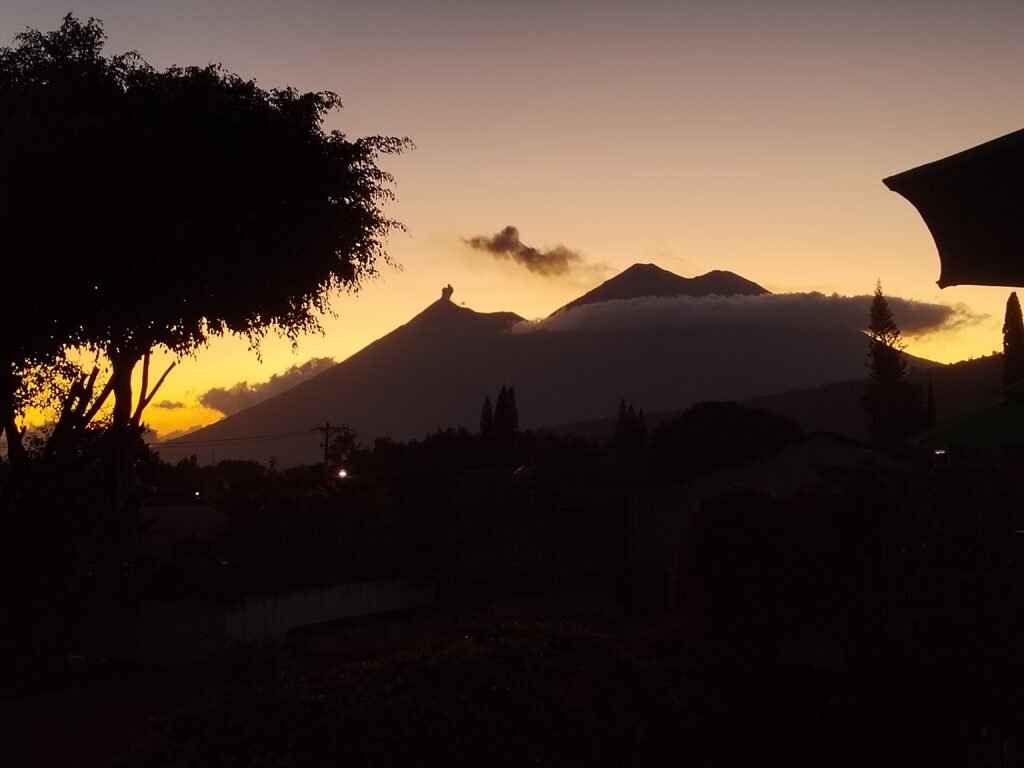
(foto #1, Antigua Guatemala from a rooftop with colonial rooftops and Volcán de Fuego y Acatenango in the background)
1. Explore Antigua Guatemala on Foot
One of the simplest ways to experience Antigua is also one of the most rewarding: walk.
The historic center is compact, with streets arranged in a grid that dates back to the city’s colonial development. Many of the most interesting details are not found inside a particular attraction but along the streets themselves.
Look for colorful colonial facades, wooden doors, traditional courtyards, old fountains, carved details and buildings that reveal different layers of the city’s history.
Antigua is particularly enjoyable when you allow yourself time to walk without following a strict checklist.
Start around Parque Central and gradually explore the surrounding streets. Instead of visiting only the most famous landmarks, take time to turn onto quieter streets and observe how historic architecture exists alongside modern cafés, restaurants, galleries, hotels and local businesses.

(foto #2, Traveler walking along a colorful cobblestone street in Antigua Guatemala)
Look Beyond the Main Streets
Some of the most memorable photographs in Antigua can come from simple details: a brightly painted doorway, a traditional courtyard, flowers growing beside an old wall or a view of a volcano appearing between colonial buildings.
This is one reason a guided walking experience can add another dimension to a visit. A local guide can provide historical context and point out details that travelers might otherwise walk past.
2. See Antigua’s Famous Santa Catalina Arch — Then Keep Walking
Santa Catalina Arch is one of Antigua’s best-known landmarks and one of the city’s most photographed locations.
The arch was built as part of the Santa Catalina Virgin and Martyr convent complex and became an important connection between different parts of the religious complex. Today, the arch and the street surrounding it have become an iconic image of Antigua.
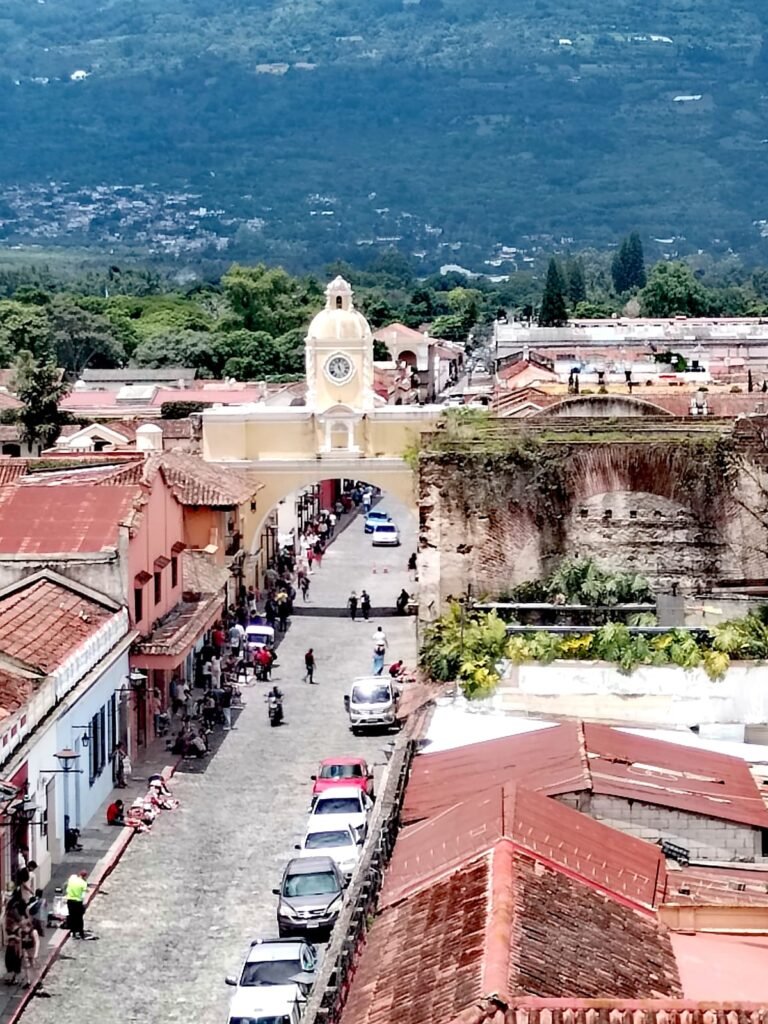
(foto #3, Santa Catalina Arch with Volcán de Agua visible beyond the street)
It is worth visiting early in the day or later in the afternoon when the light can create a different atmosphere along the street.
But don’t stop at the photograph.
Continue walking through the surrounding area. This part of Antigua offers opportunities to discover small businesses, cafés, historic buildings and streets that reveal a more everyday side of the city.
A good travel experience is not always about collecting photographs of famous landmarks. Sometimes the memorable part is what you discover immediately after taking the photograph.
3. Discover Antigua’s Churches, Ruins and Colonial Architecture
Antigua’s religious architecture is one of the reasons the city has such cultural importance.
UNESCO identifies monuments including the Cathedral, La Merced, Las Capuchinas, Santa Clara, the former University of San Carlos and other religious and civic buildings as significant examples of the city’s architectural heritage.
Many of these structures also tell the story of earthquakes and reconstruction in Antigua. The city experienced repeated natural disasters, and the 1773 Santa Marta earthquakes caused extensive destruction.
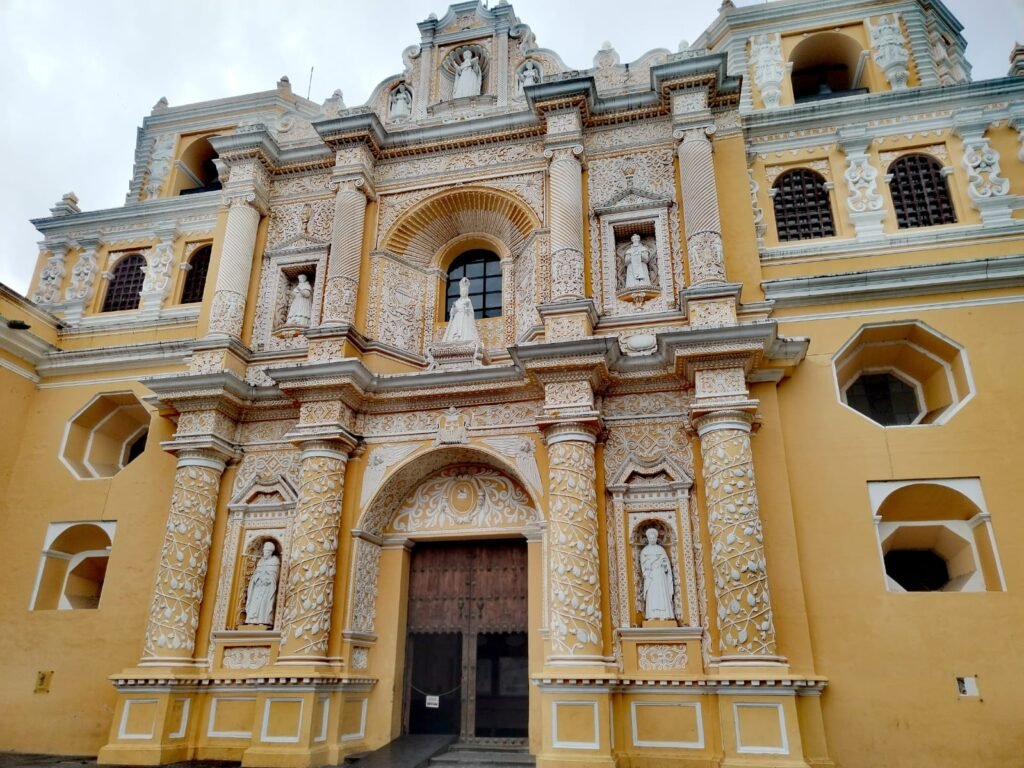
(foto #4, Colonial church or historic ruins showing Antigua’s distinctive architecture)
La Antigua Is Also a City of Ruins
One of the most fascinating characteristics of Antigua is the coexistence of restored buildings and ruins.
Rather than hiding the damage caused by centuries of earthquakes, many historic sites preserve visible evidence of the city’s past.
Walking through these spaces can feel different from visiting a conventional museum. You are seeing history within the physical landscape of the city.
For travelers interested in architecture and history, Antigua offers an opportunity to understand how colonial cities developed and how communities adapted to natural disasters over time.
4. Visit Antigua’s Central Park and Watch the City Move Around You
Parque Central, officially known as Plaza Mayor, is the traditional heart of Antigua.
It is surrounded by important buildings and is one of the best places to pause and observe daily life.
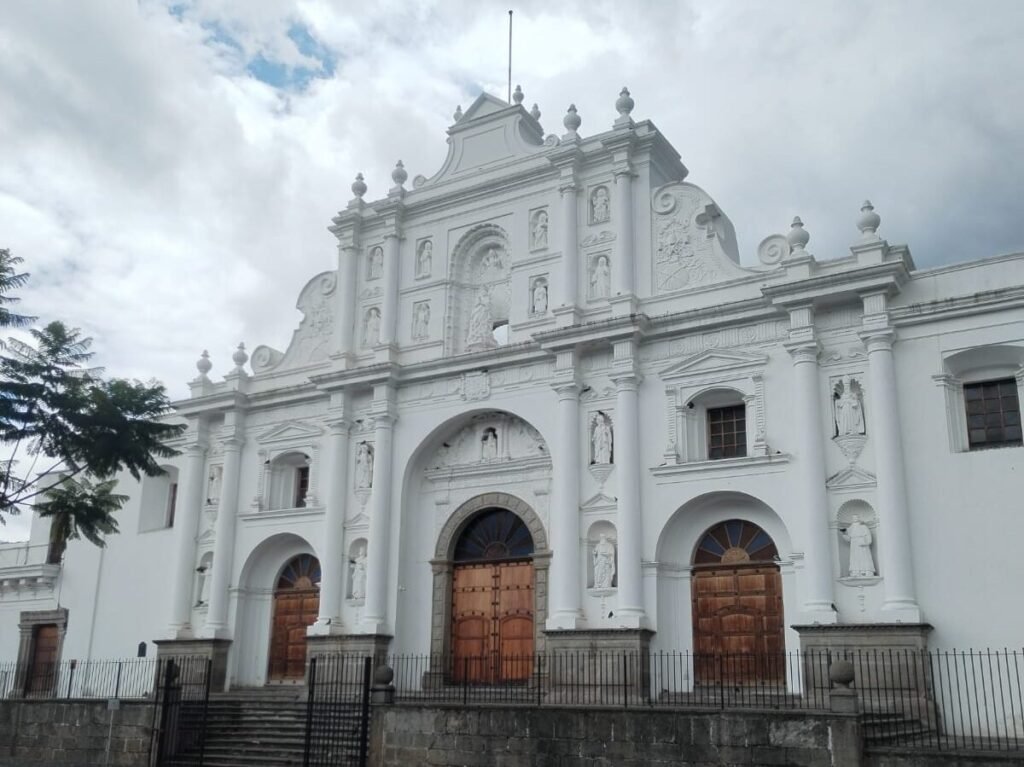
(foto #5, Parque Central with the fountain, Cathedral and surrounding colonial buildings)
Instead of treating the plaza as simply another sightseeing stop, spend some time there.
You may see residents meeting friends, visitors beginning walking tours, photographers looking for the right angle and local businesses operating around the historic center.
The square provides a useful starting point for understanding Antigua’s layout. From here, many of the city’s principal streets and landmarks can be explored on foot.
It is also a good place to begin a day of discovering the city before moving away from the main tourist routes.
5. Experience Antigua’s Local Markets
If you want to understand a destination beyond its monuments, visit its markets.
Markets reveal a different side of Guatemala: the ingredients people cook with, the colors and patterns of local textiles, everyday shopping habits and the connection between the city and the surrounding communities.

(foto #6, Antigua market with colorful produce, textiles or local products)
The Mercado de Artesanías and local markets around Antigua offer opportunities to see traditional crafts and products while also experiencing a more everyday side of the destination.
When shopping for textiles or handmade products, take time to learn about what you are buying. Guatemala has a rich textile tradition, with designs, colors and techniques that can vary between communities.
For travelers, the market experience is not simply about buying souvenirs. It is an opportunity to understand the people and traditions behind the products.
6. Taste Guatemala Through Its Food
Food is one of the easiest ways to connect with a destination.
Antigua has a diverse culinary scene, ranging from traditional Guatemalan dishes to international restaurants and contemporary interpretations of local ingredients.

(foto #7, Traditional Guatemalan food served at a local restaurant)
Instead of looking only for familiar dishes, consider trying foods that are connected to Guatemala’s culinary traditions.
Corn, beans, plantains, vegetables, cacao and a variety of herbs and spices play important roles in Guatemalan cuisine.
Local markets and traditional restaurants can provide a different perspective from the more polished dining experiences found in the city’s hotels and upscale restaurants.
Don’t Rush the Meal
One of the pleasures of traveling in Antigua is that meals can become part of the experience rather than simply a break between attractions.
Take time to ask about the ingredients, the origin of the dish and the traditions behind it.
A food experience becomes much more memorable when you understand the story behind what you are eating.
7. Discover Guatemala’s Coffee Culture
Guatemala is internationally recognized for its coffee, and Antigua is located in one of the country’s important coffee-growing regions.
The highland climate, volcanic soils and altitude contribute to the characteristics associated with coffees from the Antigua region.

(foto #8, Freshly prepared Guatemalan coffee with Antigua’s colonial architecture in the background)
For coffee lovers, Antigua offers several ways to explore this tradition.
You can visit a specialty coffee shop, learn about different preparation methods or look for experiences that connect the finished cup with the agricultural process behind it.
Look Beyond the Cup
Coffee is also a way to understand the relationship between Antigua and the surrounding agricultural landscape.
The city itself is urban and historic, but its identity is closely connected to the highlands around it.
A good coffee experience therefore goes beyond tasting notes. It can introduce travelers to an important part of Guatemala’s agricultural economy and cultural identity.
8. Visit Museums, Galleries and Historic Courtyards
Antigua has a strong relationship with art and culture.
Beyond churches and monuments, the city contains museums, galleries, cultural centers and historic buildings that allow visitors to explore different aspects of Guatemala’s history and artistic traditions.

(foto #9, Interior courtyard of a historic Antigua building or local art gallery)
One of the pleasures of exploring Antigua is discovering what is behind the doors.
Many historic buildings contain courtyards that are easy to miss from the street. Some now function as restaurants, hotels, museums, shops or cultural spaces.
Take Your Time
You do not need to visit every museum in one day.
Choose one or two that genuinely interest you and give yourself time to explore.
Traveling slowly can be particularly rewarding in Antigua because the city itself is part of the experience.
9. Explore Antigua’s Surrounding Villages
Antigua is not isolated from the communities around it.
The wider Antigua region includes historic towns and villages with their own traditions, landscapes and cultural identities.
Places such as San Juan del Obispo, San Pedro Las Huertas and San Cristóbal El Alto are part of the wider cultural landscape surrounding Antigua.
UNESCO’s World Heritage documentation includes several surrounding locations within the broader protected property associated with Antigua Guatemala.
UNESCO – Antigua Guatemala maps and property information

(foto #10, Traditional village street or local community near Antigua Guatemala)
Visiting these communities can give travelers a different perspective on the region.
Instead of experiencing Guatemala exclusively through its best-known tourist attractions, you begin to see how historic traditions, agriculture, crafts and contemporary life connect across the highlands.
For travelers interested in responsible tourism, these experiences can also provide opportunities to support locally operated businesses and community-based initiatives.
10. Watch the Sunset From a Rooftop
Antigua’s architecture is beautiful at street level, but it looks completely different from above.
Rooftop terraces throughout the city provide views across the colonial center and, on clear days, toward the surrounding volcanoes.
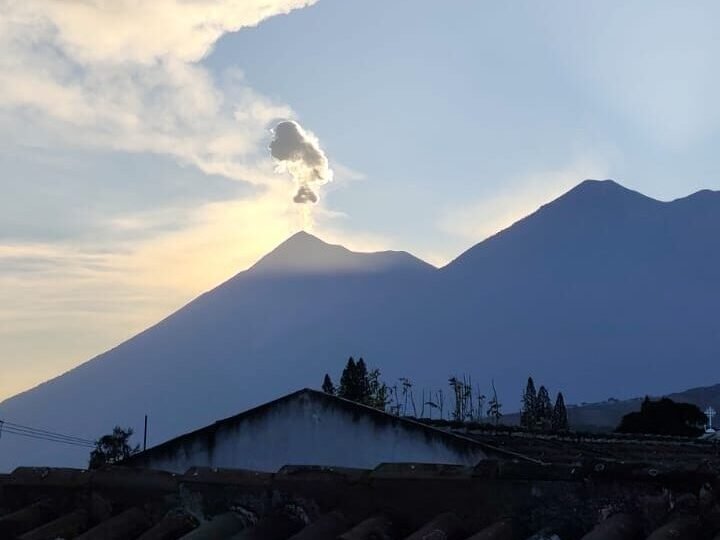
(foto #11, Sunset over Antigua Guatemala viewed from a rooftop terrace)
Sunset is an especially good time to appreciate the relationship between the city’s architecture and its natural surroundings.
The rooftops create a sea of terracotta and colonial architecture, while the mountains and volcanoes form the landscape beyond.
You don’t necessarily need a complicated itinerary for this experience.
Find a terrace, order something you enjoy, put your phone away for a few minutes and watch the light change across the city.
Sometimes that becomes one of the strongest memories of a trip to Antigua.
How Many Days Should You Spend in Antigua Guatemala?
For a first visit, two or three full days can provide enough time to experience the historic center without rushing.
With two days, you can explore the main historic areas, discover local food and coffee, visit cultural sites and spend time simply walking through the city.
With three or more days, you can slow down further and explore areas outside the busiest historic center.
The right amount of time ultimately depends on your interests.
Travelers focused on architecture and history may want more time in museums and historic sites. Food lovers can spend more time exploring restaurants, markets and cafés. Travelers interested in culture may prefer visiting surrounding communities and meeting local guides.
When Is the Best Time to Visit Antigua Guatemala?
Antigua can be visited throughout the year, but weather conditions vary between seasons.
The dry season generally offers more predictable conditions for walking around the city and enjoying outdoor viewpoints, while the rainy season can bring afternoon showers and greener landscapes.

(foto #12, Antigua Guatemala street after rainfall with reflections on the cobblestones)
There is no single perfect way to experience Antigua.
A rainy afternoon can transform the cobblestone streets, while clear mornings can provide beautiful views toward the surrounding volcanoes.
The best approach is to plan according to the type of experience you want and remain flexible.
How to Experience Antigua Like a Local
You don’t have to completely avoid tourist attractions to experience Antigua authentically.
Instead, combine the famous places with smaller discoveries.
Walk beyond the main streets.
Eat local food.
Visit a market.
Talk to a local guide.
Learn the story behind a building instead of only taking a photograph.
Visit a neighborhood outside the busiest center.
Try local coffee.
Spend time in a courtyard.
Watch the city from a rooftop.
Most importantly, leave room in your itinerary for something that wasn’t planned.
That is often where travel becomes an experience rather than a checklist.
A Different Way to Discover Antigua
At Black Jaguar Guatemala Experience, we believe that exploring Guatemala is about more than simply visiting attractions.
Our experiences are designed to connect travelers with the history, culture, food, landscapes and people that make Guatemala unique.
A walking experience through Antigua can help put the city’s architecture and history into context. Food-focused experiences offer another way to understand local culture, while excursions into the surrounding highlands reveal how closely Antigua is connected to the landscapes and communities around it.

(foto #13, Black Jaguar guide interacting with travelers during a walking experience in Antigua Guatemala)
The advantage of exploring with a local guide is not simply having someone lead the way.
It is having someone who can explain what you are seeing, answer questions, share local context and help you notice details that might otherwise be missed.
Frequently Asked Questions About Antigua Guatemala
Is Antigua Guatemala worth visiting?
Yes, Antigua offers a combination of historic architecture, cultural experiences, food, coffee, markets, art and surrounding landscapes within a relatively compact destination.
The city’s historic significance is internationally recognized through its inscription as a UNESCO World Heritage Site in 1979.
UNESCO World Heritage Centre
What is Antigua Guatemala famous for?
Antigua is particularly known for its colonial architecture, historic churches and ruins, cobblestone streets, colorful buildings, surrounding volcanoes and cultural traditions.
Its historic urban layout and surviving monuments are among the characteristics recognized by UNESCO.
UNESCO – Antigua Guatemala
Can you explore Antigua Guatemala on foot?
Yes. The historic center is relatively compact, and walking is one of the best ways to appreciate its architecture and streets.
Comfortable shoes are recommended because many streets have cobblestone surfaces.
How long should I stay in Antigua Guatemala?
Two to three full days is a useful starting point for travelers who want to explore the historic center and include food, culture and local experiences.
Travelers with more time can use Antigua as a base for exploring additional destinations in the surrounding region.
What should I do beyond the main attractions?
Consider exploring local markets, trying Guatemalan food, visiting coffee shops, discovering museums and galleries, walking through less busy streets, visiting surrounding communities and spending time observing daily life in the historic center.
Is Antigua Guatemala only about colonial architecture?
No.
The colonial architecture is an important part of the city’s identity, but Antigua is also a living city with restaurants, markets, cafés, artists, local communities, cultural traditions and contemporary businesses.
The combination of historic heritage and everyday life is part of what makes the destination interesting.
Final Thoughts
Antigua Guatemala is easy to photograph but much more rewarding to experience slowly.
The famous landmarks deserve a place on your itinerary, but they are only the beginning.
Walk through the historic center. Look inside the courtyards. Taste local food. Discover Guatemalan coffee. Visit a market. Talk to a local guide. Explore beyond the busiest streets. Take time to watch the city from above.
Antigua’s greatest strength is the way its history, culture and natural surroundings exist together.
For travelers willing to look beyond the postcard, the city offers something deeper: the opportunity to experience a living part of Guatemala rather than simply passing through it.
Ready to experience Antigua beyond the main attractions?
Explore the local experiences offered by Black Jaguar Guatemala Experience and discover Antigua Guatemala through the eyes of people who know the city and its surrounding communities.
Explore Black Jaguar Guatemala Experience →
Sources & Further Reading
- UNESCO World Heritage Centre – Antigua Guatemala
- UNESCO – Antigua Guatemala: Maps and World Heritage Property
- UNESCO – Guatemala World Heritage Convention
About Black Jaguar Guatemala Experience
Black Jaguar Guatemala Experience is a locally operated travel company based in Antigua Guatemala, creating experiences that connect international travelers with Guatemala’s history, culture, food, nature and local communities.
Last updated: September 2026

Contact us